


Shipping Container Lifting Equipment: Essential Tools for Efficient Logistics Operations
Shipping Container Lifting Equipment refers to a range of specialized machinery designed to handle the lifting, moving, and positioning of shipping containers in logistics hubs, ports, warehouses, and construction sites. These tools address the core challenge of handling heavy, standardized containers—typically weighing 20 to 40 tons when loaded—by replacing manual labor with mechanical efficiency. Unlike basic lifting tools that lack precision, Shipping Container Lifting Equipment is engineered to match the dimensions and weight-bearing requirements of standard containers, ensuring safe and stable operations. It includes various types such as Container Lifting Machines, Loaded Container Handlers, and Container Forklifts, each tailored to specific scenarios, from port-side container stacking to warehouse interior transfers. By streamlining container handling workflows, Shipping Container Lifting Equipment reduces operational delays and minimizes the risk of cargo damage, making it a cornerstone of modern supply chain management.
Shipping Container Lifting Equipment comes in diverse configurations to adapt to different operational environments
In busy ports, gantry crane-based Shipping Container Lifting Equipment is commonly used to lift containers from cargo ships onto trucks or railcars, with long lifting arms that cover wide working areas. For inland logistics centers, mobile Shipping Container Lifting Equipment—such as wheeled models—offers flexibility to move containers across uneven ground, eliminating the need for fixed infrastructure. Some advanced Shipping Container Lifting Equipment integrates remote control systems, allowing operators to manage lifting operations from a safe distance, which is particularly useful in high-risk areas like construction zones or busy freight yards. Additionally, compact versions of Shipping Container Lifting Equipment are designed for urban warehouses with limited space, where maneuverability is as critical as lifting capacity.
Container Lifting Machine is a key subset of Shipping Container Lifting Equipment, focused on precise vertical lifting and horizontal movement of containers
Unlike general-purpose lifting machines, Container Lifting Machine is built with clamps or spreaders that securely grip container corners, ensuring a tight hold even when handling fully loaded units. Many Container Lifting Machines feature adjustable lifting speeds, allowing operators to slow down during delicate positioning—such as placing containers onto narrow truck beds—and speed up during long-distance transfers. In cold storage facilities, specialized Container Lifting Machines with insulated components prevent condensation from affecting mechanical parts, ensuring reliable performance in low-temperature environments. This focus on specialization makes Container Lifting Machine indispensable for operations that require both power and precision.
Loaded Container Handler is a heavy-duty type of Shipping Container Lifting Equipment designed exclusively for handling fully loaded containers
Unlike equipment that struggles with maximum weight limits, Loaded Container Handler can lift containers weighing up to 45 tons, making it ideal for port terminals and intermodal yards where most containers arrive fully stocked. It typically features a sturdy mast and a wide wheelbase for stability, even when lifting containers to heights of 8 to 10 meters for stacking. Many Loaded Container Handlers also include load-sensing technology that alerts operators if the container exceeds weight capacity, preventing equipment overload and potential accidents. For logistics companies dealing with high volumes of inbound and outbound cargo, Loaded Container Handler reduces turnaround time by enabling rapid stacking and retrieval of loaded containers.
Container Forklifts are a versatile type of Shipping Container Lifting Equipment suitable for both indoor and outdoor use
Unlike large-scale port equipment, Container Forklifts are compact enough to operate inside warehouses with standard ceiling heights, while still being powerful enough to lift 20-foot or 40-foot containers. They use long, heavy-duty forks that slide into the container’s bottom slots, providing a stable lifting point. Many modern Container Forklifts are electric-powered, reducing emissions and noise—making them suitable for urban warehouses or indoor facilities where air quality is a concern. Additionally, some Container Forklifts come with rotating forks, allowing operators to tilt containers slightly to adjust cargo position, which is useful for loading or unloading goods that require careful alignment.
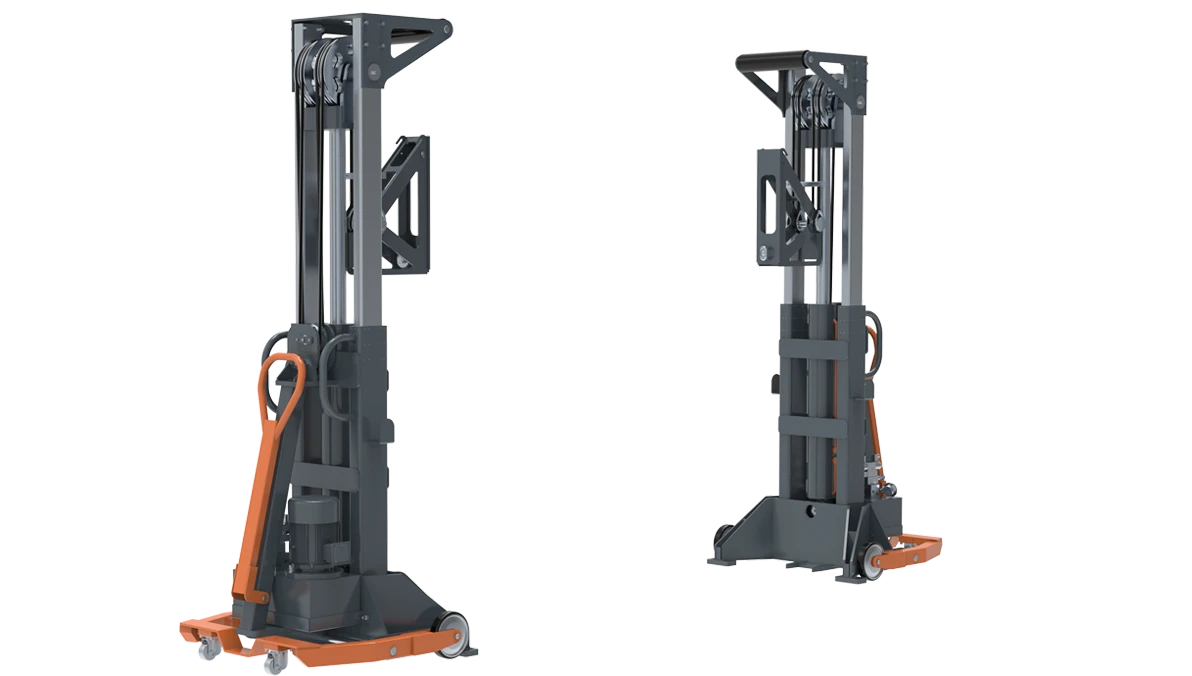
Shipping Container Lift is a portable or semi-portable type of Shipping Container Lifting Equipment, often used for temporary or small-scale operations
Unlike fixed or large mobile equipment, Shipping Container Lift is lightweight enough to be transported to remote sites—such as construction camps or rural distribution centers—where permanent lifting infrastructure is unavailable. It typically uses hydraulic systems to lift containers a few feet off the ground, enabling operators to slide trucks or trailers underneath for transport. Some compact Shipping Container Lifts can be operated by a single person, making them ideal for small businesses or logistics operations with limited staff. While Shipping Container Lift has a lower lifting capacity compared to other equipment, its portability fills a critical gap in scenarios where flexibility is more important than maximum weight handling.
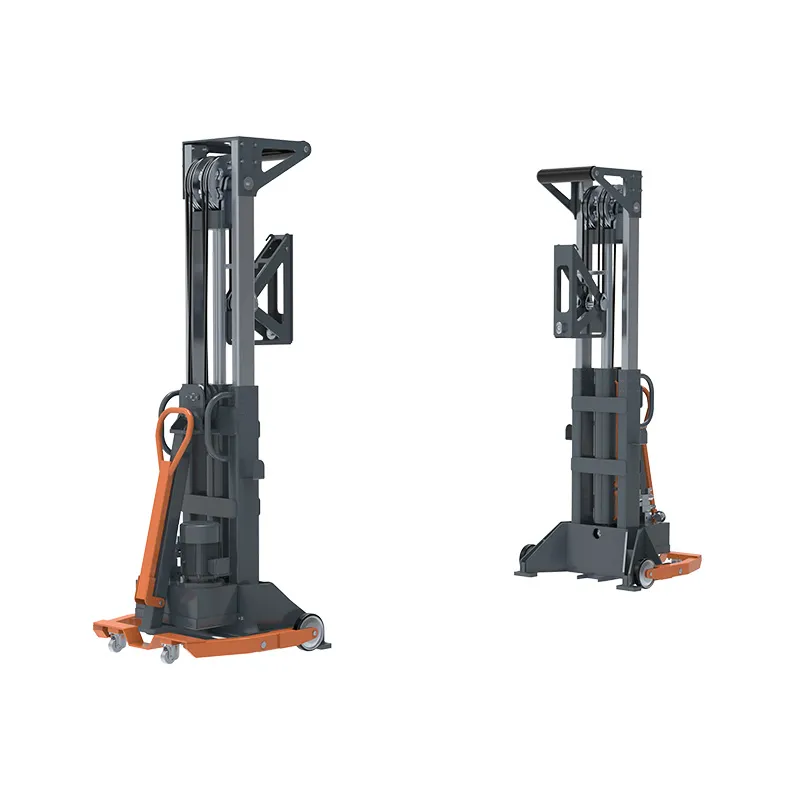
In summary, Shipping Container Lifting Equipment, along with its key subsets—Container Lifting Machine, Loaded Container Handler, Container Forklifts, and Shipping Container Lift—forms a comprehensive system for handling containers in diverse logistics scenarios. Each type of equipment addresses specific needs, from heavy-duty port stacking to portable remote-site operations, ensuring that containers of all sizes and weights can be moved safely and efficiently. By combining power, precision, and adaptability, Shipping Container Lifting Equipment reduces operational costs, minimizes risks, and keeps supply chains running smoothly. As global trade continues to grow, the role of Shipping Container Lifting Equipment will only become more vital, driving innovations in efficiency, sustainability, and safety to meet the evolving demands of modern logistics.
Container Lifting Jacks FAQs
1. What are the primary functions of container lifting jacks?
Container lifting jacks are designed to vertically elevate shipping containers for efficient loading and unloading operations. These devices enable workers to access container contents from ground level without requiring manual lifting or additional platform structures.
2. How do container lifting jacks improve operational safety?
The equipment incorporates hydraulic stabilization systems and automatic locking mechanisms that prevent accidental container displacement during lifting operations. This eliminates the risks associated with traditional manual unloading methods and reduces workplace injuries.
3. What power options are available for container loading and unloading machines?
These machines offer multiple power configurations including electric, hydraulic, and hybrid systems. Electric models provide zero emissions for indoor operations while hydraulic versions deliver higher lifting capacity for heavy-duty applications.
4. Can container lifting jacks handle different container sizes?
Yes, adjustable spreader bars and adaptable lifting arms allow the equipment to accommodate standard 20-foot and 40-foot containers as well as various special container dimensions through customizable attachment configurations.
5. What maintenance features do container loading and unloading machines include?
The equipment features self-diagnostic systems that monitor hydraulic pressure and structural integrity. Maintenance alerts are generated automatically based on usage hours, with easily accessible service points for routine inspections and component replacements.
Latest News
-
Efficient automated hot air drying equipment for steel structure application
NewsApr.16,2026 -
Efficient hot air drying system for steel structure spraying line
NewsApr.09,2026 -
Optimizing Steel Structure Spraying with Hot Air Drying Technology Solutions
NewsApr.07,2026 -
HighEfficiency Hot Air Drying Painting Equipment for Superior Industrial Coatings
NewsApr.04,2026 -
Optimizing Industrial Processes with Hot Air Furnace Heating Spraying Systems
NewsMar.31,2026 -
Comprehensive Tailormade Steel Structure Spraying Solution for Enhanced Durability
NewsMar.28,2026 -
Optimizing Steel Structure Protection through Customization and Integration of Spraying System
NewsMar.26,2026


