


Precision Welding Boom Arm | Efficient Fume Extraction
Introduction to Advanced Welding Fume Extraction Technology
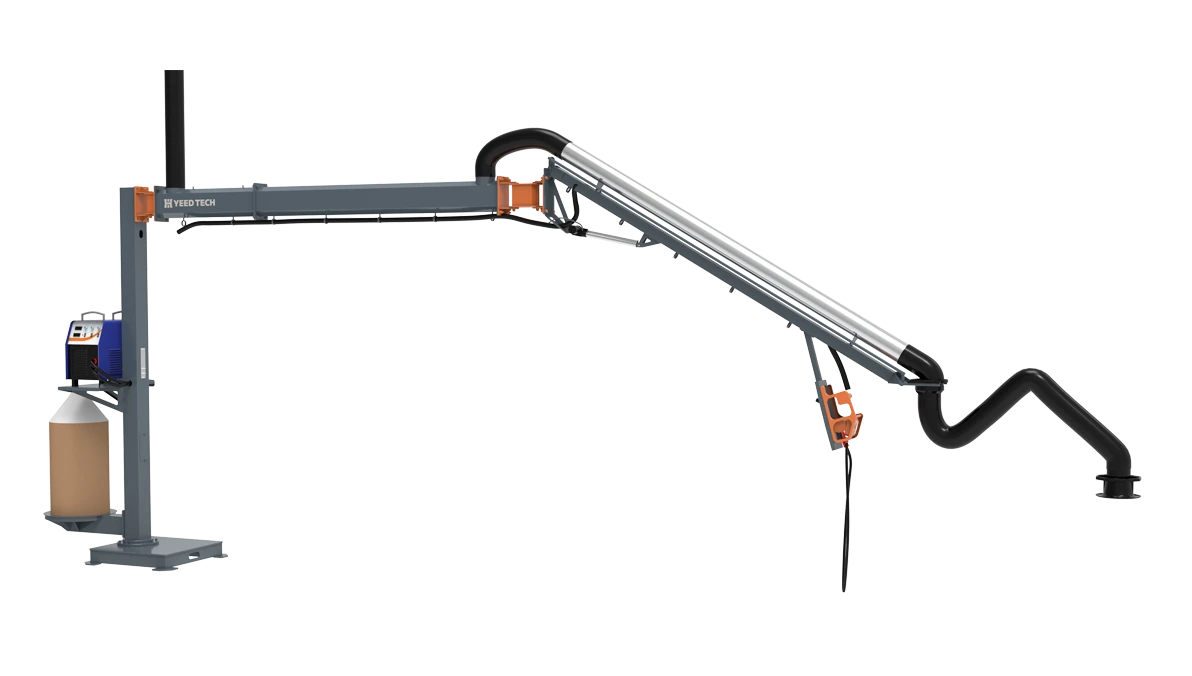
In industrial environments, particularly within fabrication, manufacturing, and maintenance sectors, ensuring worker safety and maintaining air quality are paramount. The generation of welding fumes poses significant health risks, necessitating robust and efficient extraction solutions. A critical component in these systems is the welding boom arm, an articulation mechanism designed for precise capture of harmful particulates and gases at the source. This article delves into the technical intricacies, application benefits, and strategic considerations for deploying these essential components as part of comprehensive welding air filtration systems.
Modern industrial practices demand solutions that are not only effective but also durable, energy-efficient, and adaptable to diverse operational layouts. The evolution of the welding boom arm reflects this demand, integrating advanced material science, precision engineering, and ergonomic design to deliver superior performance in challenging conditions. Our discussion will cover everything from manufacturing processes and technical specifications to real-world application scenarios and crucial factors for vendor selection, ensuring a holistic understanding for B2B decision-makers and technical professionals.
Manufacturing Process and Technical Sophistication
The production of a high-performance welding boom arm involves a meticulous multi-stage manufacturing process, ensuring durability, flexibility, and longevity. The emphasis is on selecting robust materials and employing advanced fabrication techniques to withstand the harsh industrial environment.
Materials and Fabrication Techniques:
- Arm Structure: Typically constructed from high-grade anodized aluminum alloys or powder-coated steel. Aluminum offers an excellent strength-to-weight ratio, enhancing maneuverability, while steel provides superior rigidity and impact resistance. Components like joints and bearings often utilize stainless steel for corrosion resistance.
- Hoses and Ducts: Made from high-temperature resistant and flame-retardant materials such as PVC-coated fabric, reinforced polyurethane, or specialized rubber compounds, designed to handle abrasive particles and elevated temperatures.
- Hood/Nozzle: Often forged or deep-drawn from aluminum or steel, sometimes with an added protective coating to resist welding spatter and wear.
Process Flow Steps (Schematic):
- Raw Material Sourcing: Procurement of certified aluminum billets, steel sheets, and specialized polymer compounds conforming to ASTM or EN standards.
- Precision Cutting & Forming: CNC laser cutting or plasma cutting for metal components, followed by hydraulic bending and stamping to achieve precise geometries.
- Machining & Fabrication: CNC machining for critical joint components, ensuring tight tolerances for smooth articulation. Welding (TIG/MIG) of structural elements for robust assembly.
- Surface Treatment: Anodizing for aluminum or multi-stage powder coating for steel parts to enhance corrosion resistance and aesthetic finish. This often includes a phosphating or sandblasting pre-treatment.
- Hose & Duct Assembly: Integration of flexible hoses, supported by internal or external frames, designed for optimal airflow dynamics and minimal pressure drop.
- Final Assembly: Meticulous assembly of all components, including springs, dampers, friction joints, and the extraction hood, ensuring balanced movement and stability.
- Quality Control & Testing: Each unit undergoes rigorous testing including articulation smoothness, suction efficiency, structural integrity (load bearing), and leakage checks.
Testing Standards and Service Life:
Our products adhere to stringent international testing standards such as ISO 15012-1 (Health and safety in welding and allied processes – Fume extraction and separation), ANSI/AWS F1.5 (Methods for Sampling Airborne Particulates Generated by Welding and Allied Processes), and relevant CE directives. This ensures compliance with occupational health and safety regulations globally. A typical welding boom arm, with proper maintenance, is designed for a service life exceeding 10-15 years in continuous industrial operation, underscoring its long-term value.
Target Industries and Application Advantages:
These extraction arms are indispensable in a variety of heavy and light industries, including:
- Petrochemical: For welding on pipelines and structural components, where precision and safety are critical.
- Metallurgy: In steel mills and foundries for localized fume capture during fabrication and repair.
- Automotive Manufacturing: For spot welding, assembly line repairs, and custom modifications.
- Shipbuilding: Handling large-scale fabrication, often in confined spaces.
- General Fabrication & Repair Shops: Enhancing workshop safety and compliance.
Key advantages include significant energy savings due to precise source capture, reducing the need for large-scale general ventilation; exceptional corrosion resistance through specialized coatings and materials, extending product lifespan; and superior flexibility, allowing the arm to be positioned exactly where needed, even in awkward angles, without sagging.
Industry Trends and Market Dynamics
The market for welding boom arm and related welding air filtration systems is undergoing significant evolution, driven by stricter environmental regulations, increasing awareness of worker health, and advancements in automation. The demand for efficient welding gas extractor technologies is particularly strong, as industries seek to comply with international occupational safety standards while optimizing operational costs.
Key Trends:
- Smart Systems Integration: Emergence of "smart" extraction arms integrated with IoT sensors, allowing for real-time monitoring of air quality, filter status, and energy consumption. This data-driven approach facilitates predictive maintenance and optimizes system performance.
- Energy Efficiency: Focus on variable frequency drives (VFDs) for fans and optimized duct designs to reduce energy consumption. Many modern systems are designed to minimize air volume requirements while maintaining capture velocity.
- Modularity and Customization: Growing demand for modular systems that can be easily adapted to different workshop layouts and welding processes. Customization allows for tailored solutions that address specific fume types and volumes.
- Ergonomics and Usability: Improved ergonomic designs, with lighter materials and better balance mechanisms, make the arms easier for operators to reposition, reducing physical strain and increasing productivity.
- Enhanced Filtration Technologies: Development of more effective filter media, including self-cleaning pulse-jet systems, HEPA filters for ultra-fine particulate removal, and activated carbon filters for gas and odor absorption.
These trends underscore a move towards more intelligent, sustainable, and user-friendly fume extraction solutions, where the welding boom arm acts as the crucial interface for effective source capture.
Technical Specifications and Performance Metrics
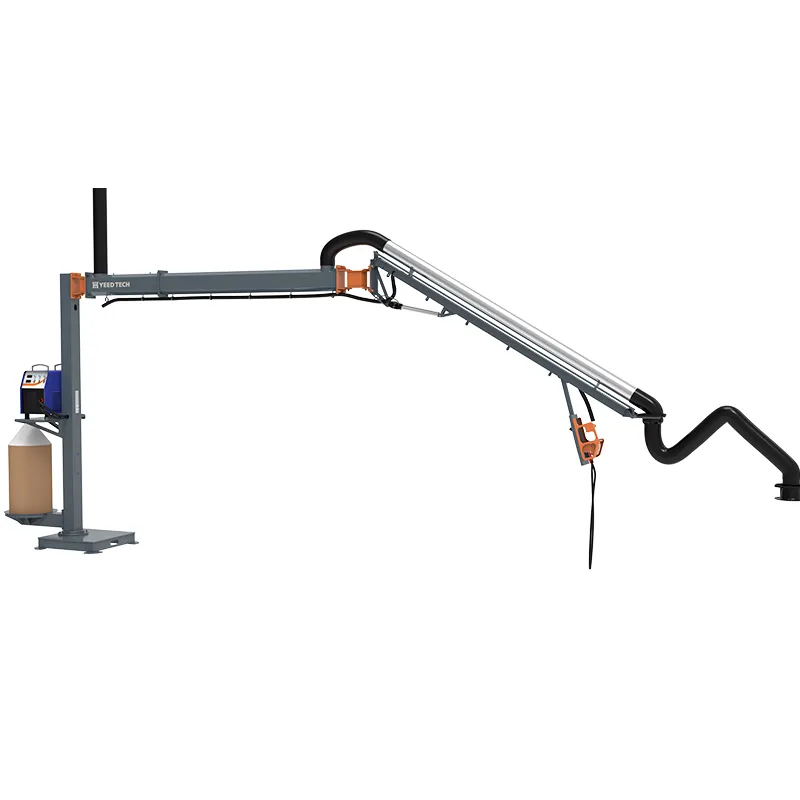
Understanding the technical specifications of a welding boom arm is crucial for proper system integration and performance evaluation. Key parameters determine its suitability for specific industrial applications.
Typical Product Specifications:
| Parameter | Typical Range / Value | Unit |
|---|---|---|
| Arm Length | 2 to 6 | Meters |
| Diameter (Hose/Duct) | 100 to 200 | mm |
| Airflow Capacity | 900 to 2500 | m³/h |
| Pressure Drop (Arm only) | 100 to 250 | Pa |
| Operating Temperature | -10 to +90 | °C |
| Material | Aluminum Alloy / Powder-coated Steel | |
| Mounting Options | Wall, Ceiling, Bench, Mobile |
These specifications directly influence the effectiveness of the entire welding fume extraction arm price and overall system. For instance, a larger diameter and higher airflow capacity are essential for processes generating significant fume volumes, while specific material choices are dictated by the presence of corrosive agents or high temperatures. The minimal pressure drop across the arm ensures that the associated welding gas extractor unit operates efficiently, conserving energy.
Diverse Application Scenarios
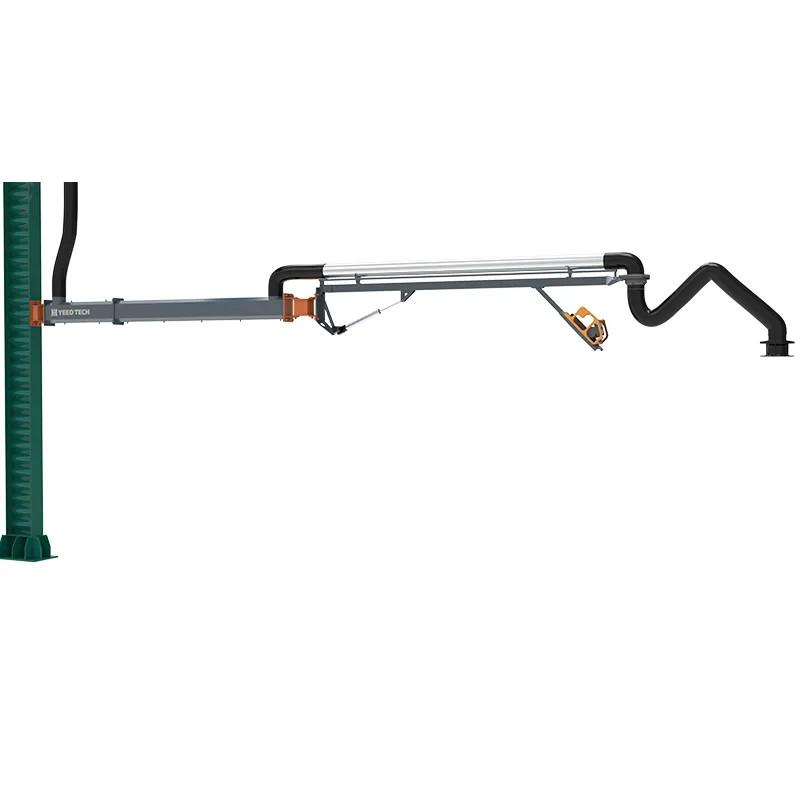
The versatility of the welding boom arm makes it an indispensable tool across a wide array of industrial applications where localized fume and particulate extraction is critical.
Typical Use Cases:
- Manual Welding Stations: Providing pinpoint extraction for MIG, TIG, Stick, and Flux-cored welding operations, ensuring operators are protected from hazardous fumes.
- Grinding and Polishing Bays: Capturing metal dust and abrasive particles generated during surface finishing processes, preventing their dispersion into the workshop atmosphere.
- Soldering and Brazing: Extracting fumes and vapours in electronics manufacturing and repair, where precise, low-volume extraction is often required.
- Laboratory and Educational Facilities: Providing safe working environments for students and researchers performing small-scale welding, chemical experiments, or material processing.
- Maintenance and Repair Operations: Offering flexible extraction for temporary or mobile welding tasks, where fixed ventilation systems are impractical. This is common in heavy machinery repair, vehicle maintenance, and onsite fabrication.
- Robotic Welding Cells: While often integrated directly, boom arms can supplement or provide focused extraction for specific stages or peripheral manual operations within automated welding setups.
In each scenario, the adjustable nature and robust construction of the welding boom arm allow for optimal positioning of the extraction hood directly at the fume source, maximizing capture efficiency and minimizing exposure to harmful airborne contaminants. This directly translates to improved worker health, reduced compliance risks, and a cleaner overall production environment.
Technical Advantages and ROI
Investing in a high-quality welding boom arm yields significant technical and economic advantages beyond mere regulatory compliance.
Key Advantages:
- Superior Source Capture: By placing the hood precisely where fumes are generated, up to 95% of airborne contaminants can be captured before they disperse. This is far more effective than general ventilation, which only dilutes pollutants.
- Enhanced Worker Safety & Health: Direct fume extraction drastically reduces welder exposure to hexavalent chromium, manganese, nickel, and other toxic substances, mitigating risks of respiratory illnesses, metal fume fever, and long-term health issues.
- Improved Productivity: A clear view of the workpiece, free from obscuring fumes, enables welders to work more efficiently and safely, reducing errors and increasing output.
- Energy Efficiency & Cost Savings: Localized extraction requires less air volume to be heated or cooled and then expelled, leading to substantial energy savings compared to whole-shop ventilation systems. This directly impacts the long-term welding fume extraction arm price equation. Studies indicate that well-designed spot extraction systems can reduce energy consumption for ventilation by 50-70%.
- Corrosion Resistance & Durability: Constructed from robust materials and treated with specialized coatings, these arms are designed to withstand corrosive environments and physical wear, ensuring a long operational lifespan and minimal maintenance.
- Flexibility and Ergonomics: Multi-jointed designs with internal or external support mechanisms allow for effortless repositioning. Features like smooth-glide bearings and gas spring assistance reduce operator fatigue, enhancing job satisfaction.
- Compliance Assurance: Helps facilities meet or exceed OSHA, ACGIH, and other regional occupational exposure limits (OELs) and permissible exposure limits (PELs), avoiding costly fines and legal liabilities.
The initial welding fume extraction arm price is offset by these compounding benefits, resulting in a strong return on investment through improved health outcomes, reduced operational costs, and enhanced regulatory compliance.
Vendor Comparison and Selection Criteria
Choosing the right vendor for your welding boom arm is a strategic decision that impacts performance, reliability, and long-term cost of ownership. Beyond the initial welding fume extraction arm price, several factors warrant careful consideration.
Key Comparison Factors:
| Feature/Criterion | High-Quality Vendor (Example) | Standard Vendor (Typical) |
|---|---|---|
| Material Quality | Certified Aluminum Alloys (EN AW-6063 T6), AISI 304/316 Stainless Steel, Multi-layer fire-retardant hoses. | Standard Steel (ST37), basic PVC hoses, lower-grade aluminum. |
| Articulation Mechanism | Internal spring-loaded or gas-strut supported, frictionless bearings, 360° rotation at base. Effortless one-hand positioning. | External friction joints, potential for sagging, limited rotation range, requires two-hand adjustment. |
| Finish & Coatings | Anodized aluminum, durable powder coating (min. 60µm), anti-corrosion treatments for all fasteners. | Basic paint finish, susceptible to chipping and corrosion. |
| Certifications | ISO 9001, ISO 14001, CE, ATEX (for specific models), TÜV Rheinland certified. | Basic CE mark (self-declared). |
| Warranty & Support | 3-5 year full warranty, extensive spare parts availability, dedicated technical support, onsite service. | 1-year limited warranty, limited spare parts, basic email support. |
| Customization | Highly customizable lengths, diameters, hood designs, mounting options, explosion-proof versions. | Standard models only, minimal modifications possible. |
A reputable vendor offers transparent specifications, comprehensive support, and a proven track record, providing peace of mind and ensuring the longevity and performance of your investment. Our company, for instance, holds ISO 9001 and ISO 14001 certifications, reflecting our commitment to quality and environmental management. We have proudly served clients across petrochemical, automotive, and general fabrication industries for over 15 years.
Customized Solutions and Application Case Studies
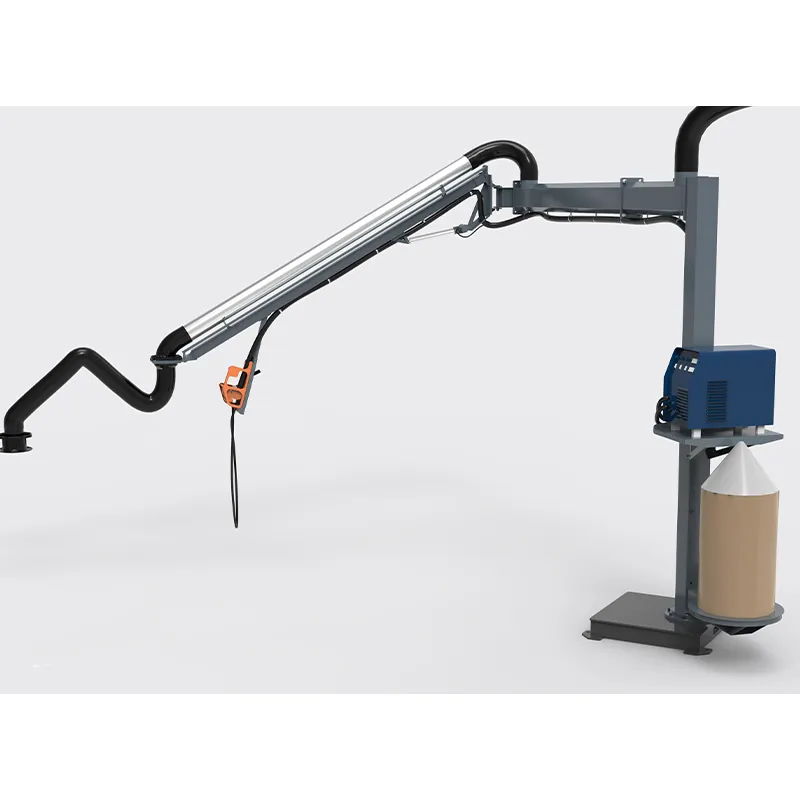
Standard models of welding boom arm are highly effective, but complex industrial setups often benefit from tailored solutions. Customization ensures optimal performance and seamless integration into unique operational environments.
Customization Capabilities:
- Extended Reach Arms: For large workpieces or multiple welding stations requiring a single, flexible extraction point.
- Corrosion-Resistant Materials: Specialized alloys or coatings for highly corrosive chemical or marine environments.
- ATEX Certified Versions: For potentially explosive atmospheres, ensuring compliance with Directive 2014/34/EU.
- Integrated Lighting & Controls: Arms with built-in LED lighting and convenient control panels for fan speed adjustment.
- Unique Mounting Solutions: Custom wall brackets, ceiling columns, or track-mounted systems for maximum workspace flexibility.
Application Case Studies:
Case Study 1: Large-Scale Shipbuilding Yard (Client: Marine Fabrication Co.)
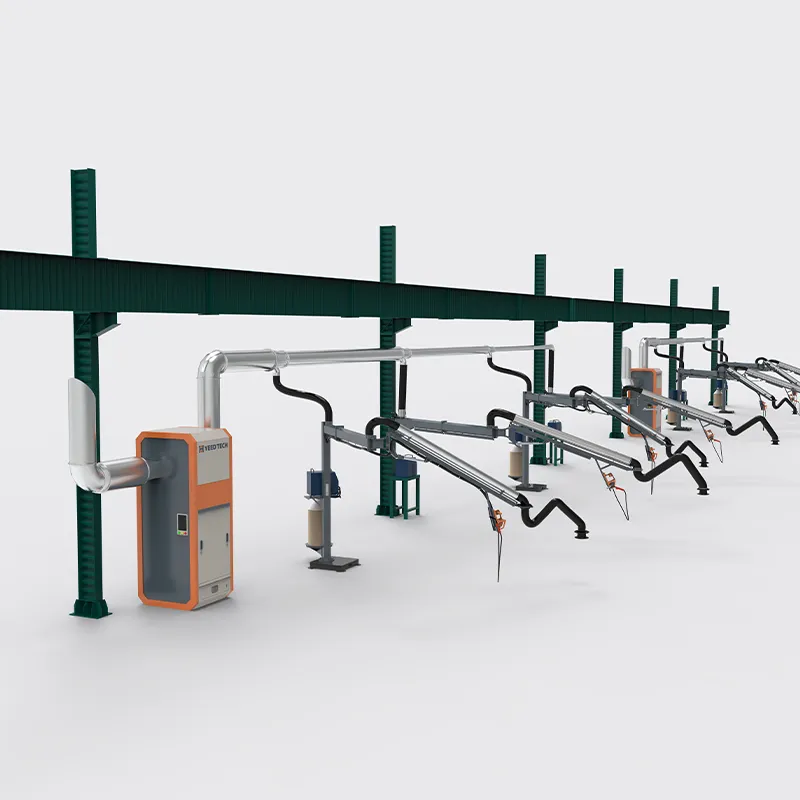
A major shipbuilding client faced challenges with fume accumulation in their large fabrication halls, impacting worker health and visibility during hull section welding. We deployed 25 customized welding boom arm units (4m reach, 200mm diameter) mounted on mobile carriages. These arms were connected to a centralized welding gas extractor system. Post-implementation, ambient fume levels were reduced by an average of 80%, worker exposure to manganese fumes dropped by 75% (verified by air sampling data), and reported productivity increased by 12% due to improved working conditions.
Case Study 2: Automotive Parts Manufacturer (Client: AutoComponent Innovations)
This client needed agile fume extraction for multiple robotic welding cells and manual finishing stations. Our solution involved 15 modular welding boom arm units (2.5m reach, 150mm diameter), ceiling-mounted with articulated joints for easy repositioning between stations. The arms were equipped with energy-efficient fans and integrated into their existing welding air filtration systems. The result was a 60% reduction in specific particulate matter (PM2.5) concentrations at the source and an estimated 20% saving on ventilation-related energy costs annually, providing a rapid return on the welding fume extraction arm price.
These case studies highlight our capability to deliver measurable improvements in air quality, safety, and operational efficiency through expertly engineered and customized fume extraction solutions.
Trustworthiness and Support ( Elements)
Our commitment to client success extends beyond product delivery, encompassing transparent information, robust support, and unwavering quality assurance.
Frequently Asked Questions (FAQ):
- Q: What is the recommended cleaning schedule for the boom arm?
- A: Regular visual inspection for debris is recommended weekly. For heavy use, quarterly internal cleaning of the ductwork and hood is advisable to maintain optimal airflow. Refer to the specific product manual for detailed instructions.
- Q: Can these arms be used outdoors or in washdown areas?
- A: Standard models are designed for indoor industrial use. Specialized outdoor-rated or IP-rated (Ingress Protection) versions with enhanced corrosion resistance are available upon request for specific environmental conditions.
- Q: How do I select the correct arm length and diameter?
- A: Selection depends on your welding zone size, reach requirements, and fume volume. Our engineering team provides complimentary site assessments and airflow calculations to recommend the ideal configuration for your specific application.
Lead Time & Fulfillment:
Standard welding boom arm models typically have a lead time of 2-4 weeks from order confirmation, subject to current stock levels. Custom configurations may require 6-10 weeks. We maintain robust supply chain logistics to ensure timely delivery and offer expedited shipping options where necessary.
Warranty Commitments:
All our welding boom arm products come with a comprehensive 3-year limited warranty covering manufacturing defects and material failures under normal operating conditions. Extended warranty options are available for critical installations. Our warranty ensures peace of mind and protection for your investment.
Customer Support:
Our dedicated customer support team provides expert assistance from initial consultation through installation and ongoing maintenance. We offer:
- Technical Consultation: Pre-sales engineering support and site assessments.
- Installation Guidance: Detailed manuals and remote support.
- After-Sales Service: Troubleshooting, spare parts, and maintenance advice.
- Training: On-site or remote training for operators and maintenance personnel.
Conclusion
The modern welding boom arm represents a critical investment in industrial health, safety, and productivity. By providing precise, efficient source capture of welding fumes, these systems not only ensure compliance with stringent occupational safety standards but also significantly enhance operational efficiency and reduce long-term costs. From advanced manufacturing processes and robust materials to customizable configurations and comprehensive post-sales support, the value proposition of a high-quality fume extraction arm is undeniable. As industries continue to evolve, integrating these sophisticated solutions into comprehensive welding air filtration systems will remain a cornerstone of responsible and efficient industrial practice.
References
- Occupational Safety and Health Administration (OSHA). "Safety and Health Topics: Welding, Cutting, and Brazing." Available at: osha.gov
- International Organization for Standardization (ISO). "ISO 15012-1: Health and safety in welding and allied processes – Fume extraction and separation." Available at: iso.org
- American Conference of Governmental Industrial Hygienists (ACGIH). "Threshold Limit Values for Chemical Substances and Physical Agents & Biological Exposure Indices." Available at: acgih.org
- American Welding Society (AWS). "ANSI/AWS F1.5: Methods for Sampling Airborne Particulates Generated by Welding and Allied Processes." Available at: aws.org
- National Institute for Occupational Safety and Health (NIOSH). "Controlling Hazardous Fumes and Gases During Welding." Available at: cdc.gov/niosh
Latest News
-
Efficient automated hot air drying equipment for steel structure application
NewsApr.16,2026 -
Efficient hot air drying system for steel structure spraying line
NewsApr.09,2026 -
Optimizing Steel Structure Spraying with Hot Air Drying Technology Solutions
NewsApr.07,2026 -
HighEfficiency Hot Air Drying Painting Equipment for Superior Industrial Coatings
NewsApr.04,2026 -
Optimizing Industrial Processes with Hot Air Furnace Heating Spraying Systems
NewsMar.31,2026 -
Comprehensive Tailormade Steel Structure Spraying Solution for Enhanced Durability
NewsMar.28,2026 -
Optimizing Steel Structure Protection through Customization and Integration of Spraying System
NewsMar.26,2026


