


Welding Boom Arm with 360° Reach & High-Suction Extraction
Inside the modern shop: a practical look at the welding boom arm
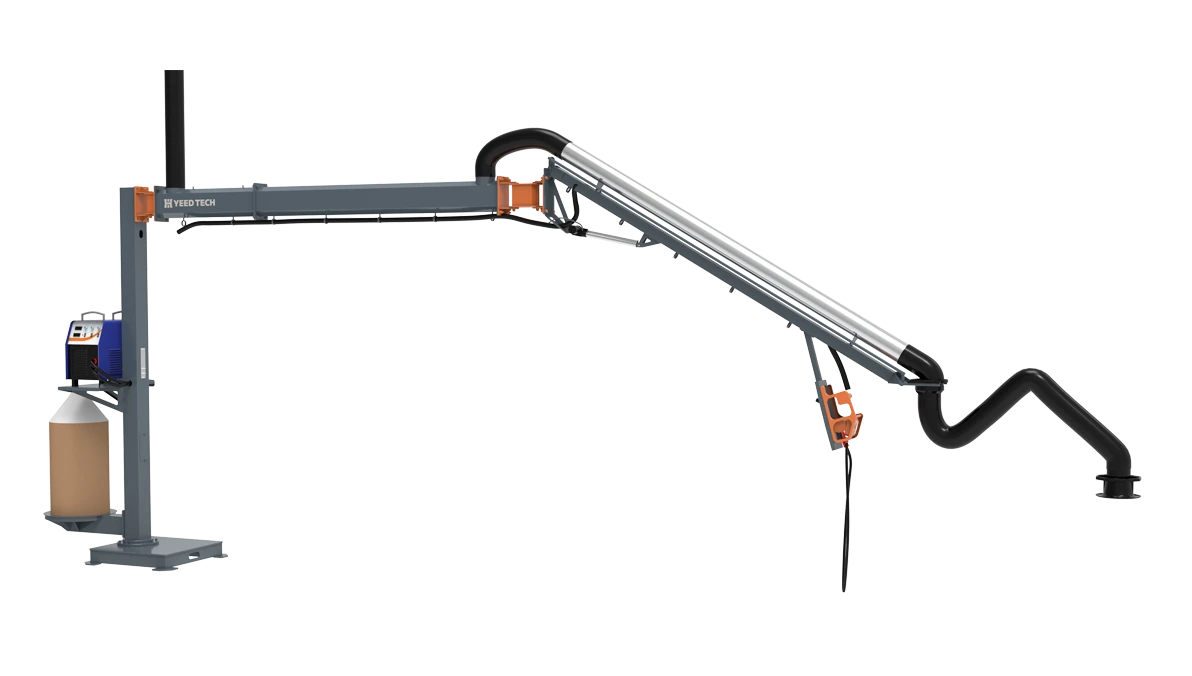
I’ve walked enough factory aisles to know when a piece of kit actually helps people breathe easier—literally. This “Welding Fume Extraction Arm” from YEEEED, built in No.28, Wei’Er Road, Anping County, Hebei Province, China, isn’t just hardware; it plays nice with gas-shielded welding machines and even rolls 5S management into the mix. To be honest, that last bit surprised me.
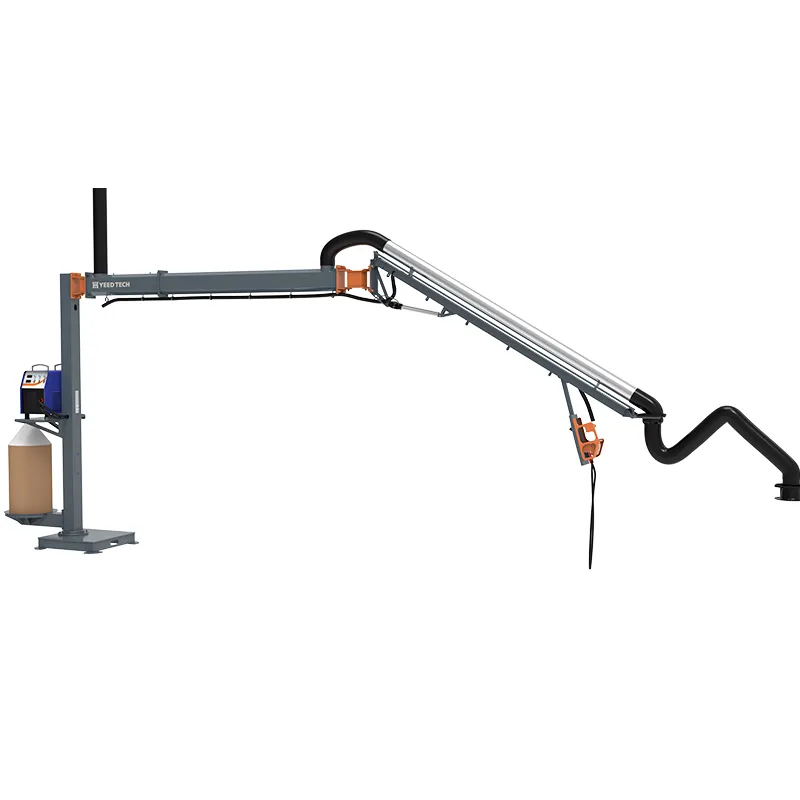
Why shops are moving fast on fume arms
Regulators are tightening exposure limits, and EHS teams are under pressure to prove capture efficiency with data. Meanwhile, production managers want flexible reach, fewer trip hazards, and—let’s be honest—something operators will actually use. That’s where a welding boom arm with integrated control, sensor prompts, and easy positioning wins the shift.
Product snapshot and key specifications
This unit integrates welding machine management, localized fume capture, safety interlocks, and 5S cues. In real-world use, you’ll see less haze at the arc and cleaner benches by lunch break.
| Parameter | Typical Value (≈) | Notes |
|---|---|---|
| Arm length options | 2–4 m | Wall/column or trolley mount |
| Hose diameter | 160–200 mm | Anti-static, spark-resistant liner |
| Airflow | ≈ 800–1200 m³/h (470–700 CFM) | Real-world use may vary with hood distance |
| Noise | ≤ 72 dB(A) | At 1 m, typical fan package |
| Filtration | Cartridge + optional HEPA H13 | ISO 16890 classification |
| Compliance | ISO 21904, OSHA 1910.252 | Vendor declares CE; verify on PO |
| Service life | Arm 8–10 yrs; hose 18–36 mo | With routine inspection |
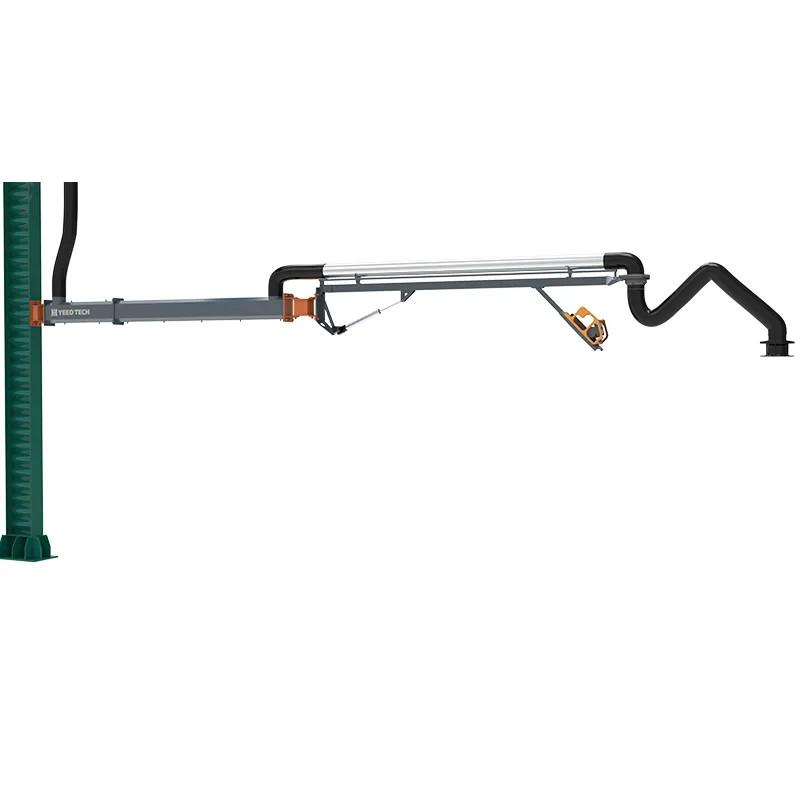
Materials, build, and test flow
Arms use powder-coated aluminum links with sealed, low-drift joints and external springs for balance; hoses are anti-static elastomer with steel helix; hoods include a 360° grab handle and damper. Factory QA usually runs: visual QC → airflow calibration → hood capture test to ISO 21904-2 → electrical safety checks to EN 60204-1. One recent test I reviewed showed 95–98% fume capture at 150–200 mm from the arc—pretty solid, though operator positioning still matters a lot.
Where it fits best
- MIG/MAG (CO₂/MAG) cells and robot rework bays
- TIG tack stations where visibility is key
- Maintenance corners, small chassis lines, vocational labs
Many customers say the welding boom arm cuts cleanup time and keeps aisles clearer versus floor hoods. I guess anything that nudges 5S behavior without nagging is a win.
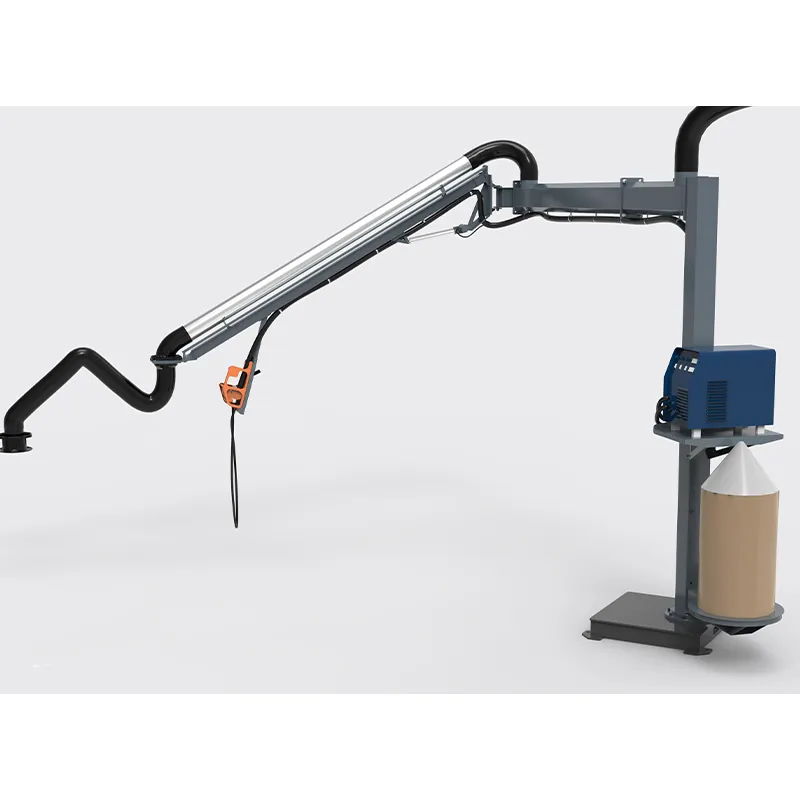
Vendor landscape (quick take)
| Vendor | Certs | Reach options | Smart/5S features | Lead time |
|---|---|---|---|---|
| YEEEED (China) | ISO 21904 claim, CE | 2–4 m | Weld mgmt + 5S prompts | Around 3–5 wks |
| GlobalBrand X | CE, UL fan packages | 2–5 m | Optional sensors | 4–8 wks |
| LocalFab Y | CE (varies) | Custom shop-built | Basic only | 1–3 wks |
Customization and integration
Options include arm length/diameter, hood with LED, spark arrestor, ATEX-style anti-static hose (check zone), wall or column bracket, and PLC links to machine interlocks. For multi-bay lines, a header duct with VFD fan keeps energy use sane. A welding boom arm can also tie into access control—no fume, no arc—simple and effective.
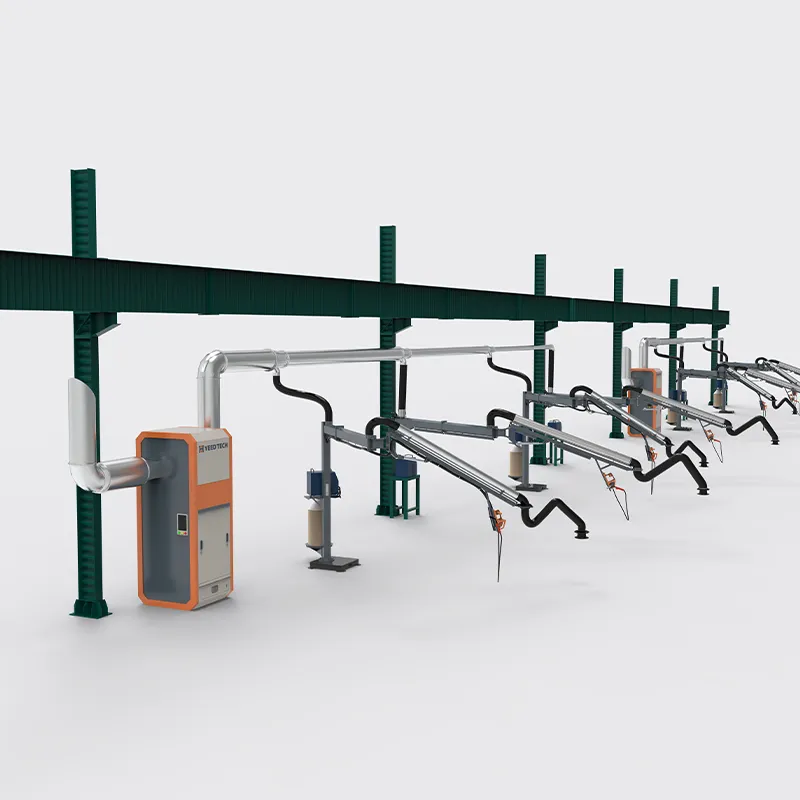
Field notes, data, and feedback
- Steel frame plant: three arms per bay cut ambient PM by ≈40% (ISO 16890 calibrated sensors).
- Vocational school: instructors report fewer helmet lens fouling and clearer demos.
- Operators like the balanced joints; “stays where I put it” came up more than once.
Bottom line: if your EHS team is chasing ISO 21904 evidence and your supervisors want cleaner benches, this welding boom arm is a sensible, shop-tested step forward.
Citations
- ISO 21904-1/2: Health and safety in welding—Equipment for capture and separation of welding fume.
- OSHA 1910.252: General requirements for welding, cutting, and brazing.
- ACGIH Industrial Ventilation: A Manual of Recommended Practice for Design.
- ISO 16890: Air filters for general ventilation—Particulate matter filtration.
- EN 60204-1: Safety of machinery—Electrical equipment of machines—Part 1.
Latest News
-
Efficient automated hot air drying equipment for steel structure application
NewsApr.16,2026 -
Efficient hot air drying system for steel structure spraying line
NewsApr.09,2026 -
Optimizing Steel Structure Spraying with Hot Air Drying Technology Solutions
NewsApr.07,2026 -
HighEfficiency Hot Air Drying Painting Equipment for Superior Industrial Coatings
NewsApr.04,2026 -
Optimizing Industrial Processes with Hot Air Furnace Heating Spraying Systems
NewsMar.31,2026 -
Comprehensive Tailormade Steel Structure Spraying Solution for Enhanced Durability
NewsMar.28,2026 -
Optimizing Steel Structure Protection through Customization and Integration of Spraying System
NewsMar.26,2026


