


Structural Coating: Durable, Fast-Cure, Cost-Effective
Structural Coating for Heavy Steel: What’s Working Now (and What Isn’t)
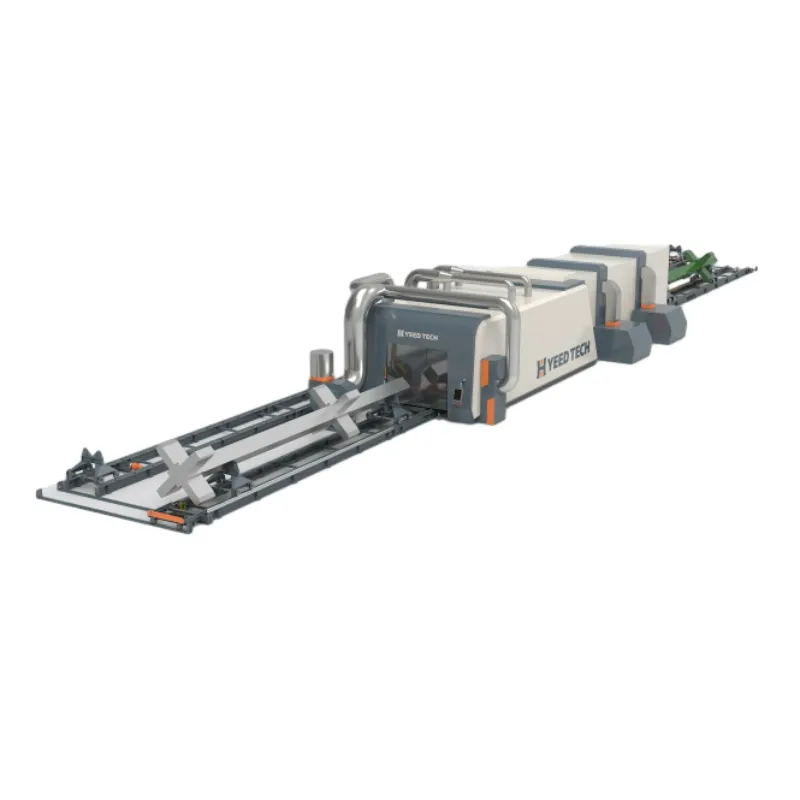
If you work around bridges, offshore platforms, or big welded frames, you already know the stakes. The first question I get—almost every week—is what structural coating system will actually survive the field. To be honest, it’s not one thing; it’s the marriage of steel prep, controlled application, and curing discipline. That’s why I spent time on the floor with the Heavy Steel Structure Painting Line in Hebei. It’s built for large, complex pieces and, frankly, that matters when welds, corners, and stiffeners become failure magnets.
Trends and where structural coating is headed
Two shifts stand out: smarter prep (robotic blasting, better dust extraction) and tighter climate control from booth to cure. Many customers say they’re chasing ISO 12944 C5-M targets—and surprisingly, they’re getting there with robust zinc/epoxy/polyurethane stacks and, in some cases, fast-cure polysiloxanes. Sustainability is creeping in too: high-solids, low-VOC paints are now default spec on public tenders.
Where the Heavy Steel Structure Painting Line fits
Origin: No.28, Wei’Er Road, Anping County, Hebei Province, China. It’s a purpose-built line for oversized beams, box girders, wind tower sections—any geometry that normally defeats consistency. In fact, the line enforces the basics that make or break structural coating performance.
Process flow (field-proven)
- Incoming inspection and weld dressing (edge radiusing to ≥2 mm where feasible).
- Abrasive blasting to ISO 8501-1 SA 2.5; profile 50–85 µm (ASTM D4417).
- Dust/debris removal to ISO 8502-3; soluble salt check (Bresle) per ISO 8502-6/9.
- Primer application: inorganic zinc-rich or epoxy zinc-rich, DFT ≈ 60–80 µm.
- Intermediate epoxy build: 120–200 µm for barrier integrity.
- Finish: aliphatic polyurethane or polysiloxane, 50–80 µm, UV-stable.
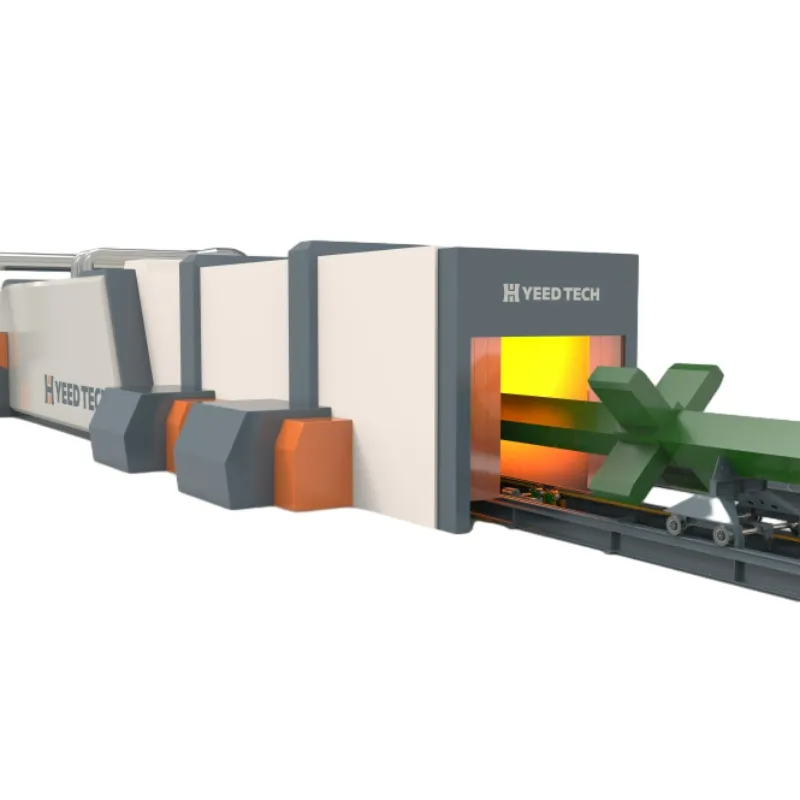
- Curing and climate control: 18–30°C, RH
- QC: DFT (ISO 19840), adhesion pull-off (ASTM D4541), holiday detection (ISO 29601).
Product specifications (typical)
| Parameter | Typical Value | Notes |
|---|---|---|
| Max workpiece size | ≈ 25 m L × 5 m W × 4 m H | Real-world use may vary by tooling |
| Conveyor load | Up to 20 t per hanger | Roller/overhead configurable |
| Paint types | High-solids epoxy, PU, Zn-rich | HVLP/airless/air-assisted |
| DFT capability | 250–350 µm (system) | Per ISO 19840 measurement |
| Env. control | Temp/RH monitoring ±2°C/±5% RH | Solvent capture + filtration |
| Service life | 15–25 yrs in C4/C5 with maintenance | Per ISO 12944 lifetime bands |
Vendor comparison (high-level)
| Vendor | Process scope | Line capacity | Env controls | Support |
|---|---|---|---|---|
| Heavy Steel Structure Painting Line | Blast → Coat → Cure → QC | Large sections, up to ≈20 t | Temp/RH + solvent capture | Factory + remote diagnostics |
| Vendor A | Coat → Cure | Mid-size only | Basic temp control | Regional |
| Vendor B | Blast → Coat | Custom, limited tonnage | Optional RH control | Project-based |
Use cases, feedback, and test data
- Bridges and viaducts: structural coating systems hitting ≥1,000 h neutral salt spray (ASTM B117) with DFT 300 µm.
- Offshore modules: adhesion pull-off ≥6–8 MPa on blasted steel (ASTM D4541), no blistering (ISO 4628-2) after cyclic exposure.
- Wind towers: customers report 20–30% rework reduction after adding RH control and edge rounding. I guess the little things pay.
Certifications and standards alignment: ISO 12944, ISO 8501/8502/8503, ISO 19840, SSPC-SP 10/NACE No.2 for blast equivalence. Third-party inspection (BV, SGS) can be integrated at FAT/SAT.
Quick note on customization: nozzle arrays, robotic arms for complex weldments, two-component proportioners, and data logging for traceability. Actually, the data piece is what many QA teams fall in love with—it ends arguments.
Case snapshot
A fabricator running box girders (8–15 t) moved to this line and standardized a Zn/Epoxy/PU stack. Result: average DFT deviation dropped from ±45 µm to ±18 µm, and touch-up hours fell by ≈22% in the first quarter. Not perfect, but a real win.
References
- ISO 12944: Paints and varnishes—Corrosion protection of steel structures by protective paint systems.
- ISO 8501-1/8502/8503: Surface preparation of steel substrates; cleanliness, salts, and profile.
- ASTM D4541: Standard Test Method for Pull-Off Strength of Coatings.
- ASTM B117: Standard Practice for Operating Salt Spray (Fog) Apparatus.
- ISO 19840: Measurement of, and acceptance criteria for, the thickness of dry films.
- SSPC-SP 10/NACE No.2: Near-White Blast Cleaning.
Latest News
-
Efficient automated hot air drying equipment for steel structure application
NewsApr.16,2026 -
Efficient hot air drying system for steel structure spraying line
NewsApr.09,2026 -
Optimizing Steel Structure Spraying with Hot Air Drying Technology Solutions
NewsApr.07,2026 -
HighEfficiency Hot Air Drying Painting Equipment for Superior Industrial Coatings
NewsApr.04,2026 -
Optimizing Industrial Processes with Hot Air Furnace Heating Spraying Systems
NewsMar.31,2026 -
Comprehensive Tailormade Steel Structure Spraying Solution for Enhanced Durability
NewsMar.28,2026 -
Optimizing Steel Structure Protection through Customization and Integration of Spraying System
NewsMar.26,2026


