


Premium Welding Boom Arm: Enhanced Reach & Safety
Industry Trends in Fume Extraction and Workplace Safety
The modern industrial landscape places an ever-increasing emphasis on workplace safety, environmental compliance, and operational efficiency, particularly in sectors involving welding and fabrication. Recent trends highlight a significant shift towards advanced welding air filtration systems and localized extraction solutions. Regulatory bodies globally, such as OSHA in the United States and the EU’s OELs, are continually tightening permissible exposure limits for welding fumes, demanding more effective control measures. This pressure, combined with a heightened awareness of long-term health risks associated with particulate and gas exposure, drives innovation in extraction technology.
Key trends include the integration of smart sensors for real-time air quality monitoring, energy-efficient fan technologies, and modular designs that allow for easy expansion and customization. There's also a rising demand for mobile and highly articulated extraction arms to cater to dynamic workshop environments and varied welding positions. The objective is not just compliance but also enhancing welder comfort and productivity. The market for welding gas extractor units is expanding, reflecting a holistic approach to air purification, encompassing not only particulate matter but also hazardous gases produced during specific welding processes.
Companies are increasingly investing in robust and flexible solutions like the welding boom arm to ensure a safe and compliant working environment. This investment is viewed not merely as a cost, but as a strategic advantage, fostering employee retention, reducing health-related liabilities, and improving overall operational integrity.
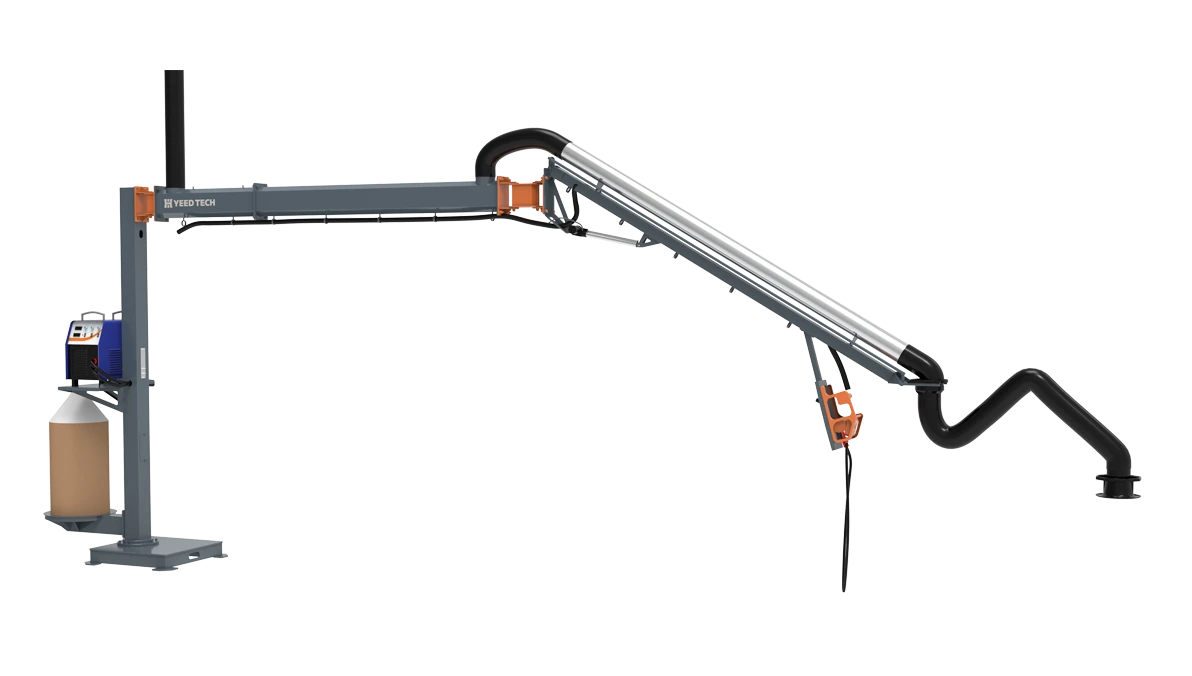
Understanding the Welding Fume Extraction Arm: Process Flow and Engineering
The manufacturing of a high-performance welding boom arm involves a meticulously engineered process, ensuring durability, flexibility, and optimal fume capture. Our products are designed to meet stringent industry standards, offering reliable and long-lasting service in demanding industrial environments.
Manufacturing Process Overview:
- Material Selection & Preparation: High-grade steel alloys, such as structural carbon steel (e.g., Q235, Q345) for the main structural components and corrosion-resistant alloys for critical joints, are precisely selected. The extraction hood often utilizes high-temperature resistant materials like specialized plastics or treated sheet metal. These materials undergo precision laser cutting and bending to form foundational components.
- Component Fabrication: Advanced manufacturing techniques are employed. Key structural elements are fabricated using robotic welding processes, ensuring consistent weld quality and structural integrity. Pivoting joints and bearing housings are often produced through CNC machining from solid stock or precision casting, providing the exact tolerances required for smooth articulation and extended service life.
- Surface Treatment & Coating: All steel components undergo rigorous surface preparation, including sandblasting to remove impurities. A multi-layer powder coating system is then applied, offering superior corrosion resistance against aggressive industrial atmospheres, chemical splashes, and abrasive particles. This treatment significantly extends the service life and maintains the aesthetic appeal of the arm.
- Assembly & Integration: High-quality bearings, robust spring mechanisms, and durable flexible hoses are integrated into the arm structure. The internal support linkages are carefully balanced to ensure effortless positioning and stability at any extension. Electrical components for integrated lighting or fan controls are securely wired and insulated.
- Quality Control & Testing: Each finished arm undergoes comprehensive testing. This includes load testing to verify structural integrity, articulation tests to ensure smooth movement across its full range, and airflow performance checks to confirm optimal fume capture velocity and volume. Noise levels are also measured to comply with workplace comfort standards. Our manufacturing process adheres strictly to ISO 9001 quality management standards, and products are designed to meet international safety norms like CE and ANSI.
Key Specifications and Advantages:
- Service Life: Engineered for industrial longevity, our arms typically boast a service life of 10-15 years with routine maintenance, offering an excellent return on investment.
- Target Industries: Indispensable across diverse sectors including petrochemical, heavy fabrication, metallurgy, automotive, shipbuilding, and educational welding workshops.
-
Typical Application Advantages:
- Energy Saving: Highly efficient capture at the source minimizes the need for large-scale ambient air filtration, significantly reducing energy consumption for heating/cooling and fan operation.
- Corrosion Resistance: Advanced surface treatments protect against corrosive welding byproducts and harsh industrial environments, ensuring sustained performance.
- Enhanced Safety: Direct capture of fumes and particulates at the source dramatically reduces welder exposure, contributing to a healthier and safer work environment.
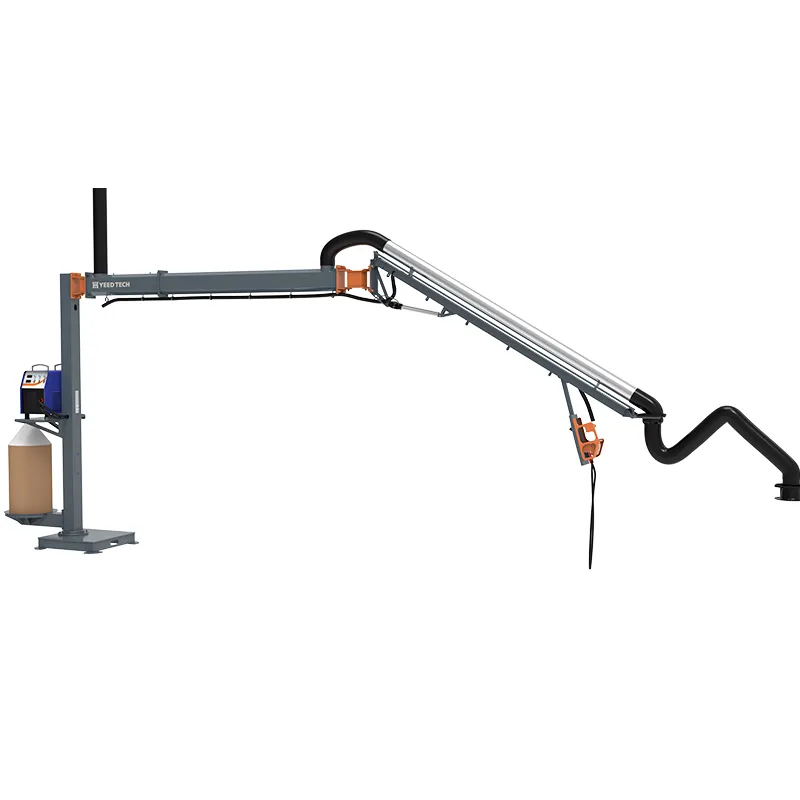
Technical Specifications and Performance Parameters
Selecting the correct welding boom arm requires a thorough understanding of its technical specifications to match operational requirements. Key parameters directly influence performance, ease of use, and integration within existing industrial setups.
Typical Product Specifications:
| Parameter | Description / Value Range |
|---|---|
| Arm Diameter | 150 mm (6 in) to 200 mm (8 in) – influences airflow capacity |
| Arm Reach | 2 meters (6.5 ft) to 4 meters (13 ft) – crucial for workstation coverage |
| Airflow Capacity (Recommended) | 1000 m³/h (590 CFM) to 2500 m³/h (1470 CFM) – dependent on arm diameter and fan unit |
| Static Pressure (at maximum airflow) | 1500 Pa to 2500 Pa (6 to 10 in. H2O) – ensures effective fume capture |
| Materials of Construction | Powder-coated steel (main structure), high-temperature resistant composite hose, aluminum joints |
| Mounting Options | Wall-mounted, ceiling-mounted, fixed column, mobile base options |
| Noise Level | Typically 70-75 dB(A) at 1 meter from the fan unit (without arm extension) |
| Operating Temperature Range | -20°C to +80°C (-4°F to +176°F) – for standard models |
| Weight (Approx.) | 40 kg to 80 kg (88 lbs to 176 lbs) depending on reach and diameter |
These specifications are crucial for engineers and procurement specialists to ensure the chosen extraction arm integrates seamlessly with existing ventilation systems or as part of a new welding air filtration systems installation. Performance data, such as capture velocity and pressure drop across the arm, are rigorously tested in accordance with ISO 15012-1 standards for occupational safety and health in welding and allied processes.
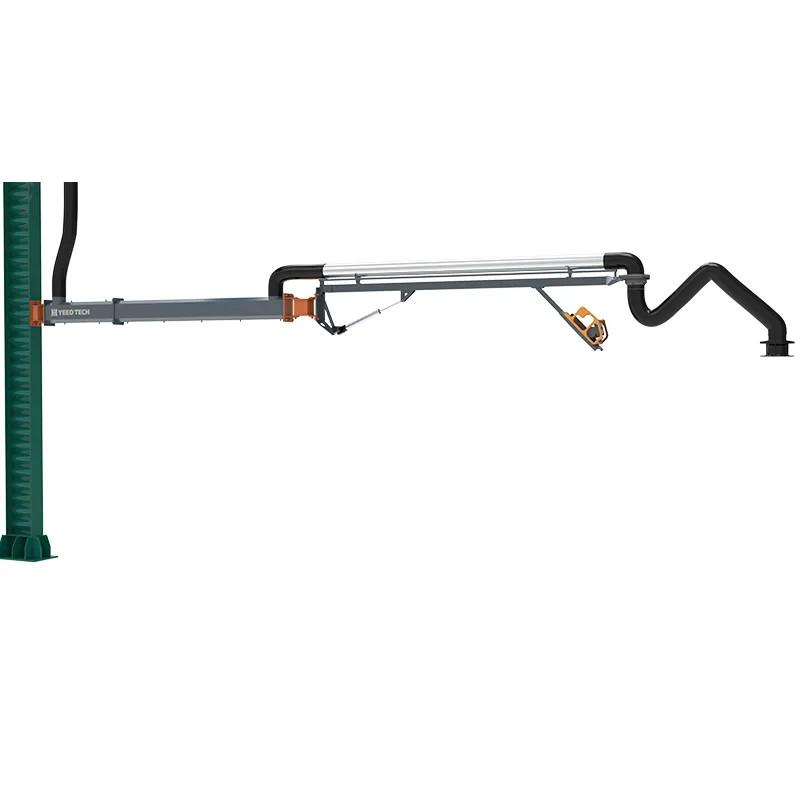
Versatile Application Scenarios
The adaptability of the welding boom arm makes it an invaluable asset across a wide spectrum of industrial applications. Its flexible design allows for precise positioning of the extraction hood directly at the fume source, regardless of the welding position or workpiece size. This localized extraction is paramount for effective fume control.
- General Fabrication Workshops: In dynamic environments where welders frequently change positions or work on varying workpiece sizes, a highly articulated arm ensures consistent fume capture without obstructing the workflow. This is critical for shops handling diverse projects, from structural steel to intricate custom components.
- Heavy Industry (Shipbuilding, Construction): For large-scale projects, fixed or rail-mounted arms with extended reach are essential. They provide localized extraction over significant areas, enhancing safety during welding operations on large metal structures or within semi-enclosed compartments where ventilation can be challenging.
- Automotive Manufacturing & Repair: In assembly lines or repair garages, precision and maneuverability are key. Smaller, highly flexible arms can be positioned to capture fumes from chassis welding, bodywork repairs, or specialized component fabrication, protecting workers and maintaining air quality.
- Educational Institutions & Training Centers: Welding schools and vocational training centers benefit immensely from these arms. They allow students to learn in a safe environment, demonstrating proper fume control techniques, while protecting instructors and fellow students from exposure.
- Robotic Welding Cells: Even with automated processes, localized fume extraction is vital. Arms can be integrated into robotic cells to capture fumes precisely as they are generated, protecting robotic components from contamination and ensuring that any fumes that escape the cell are minimized.
- Confined Space Welding: While demanding specific safety protocols, a properly configured extraction arm can be critical for localized ventilation in confined spaces, directing hazardous fumes away from the welder's breathing zone where general ventilation is impractical.
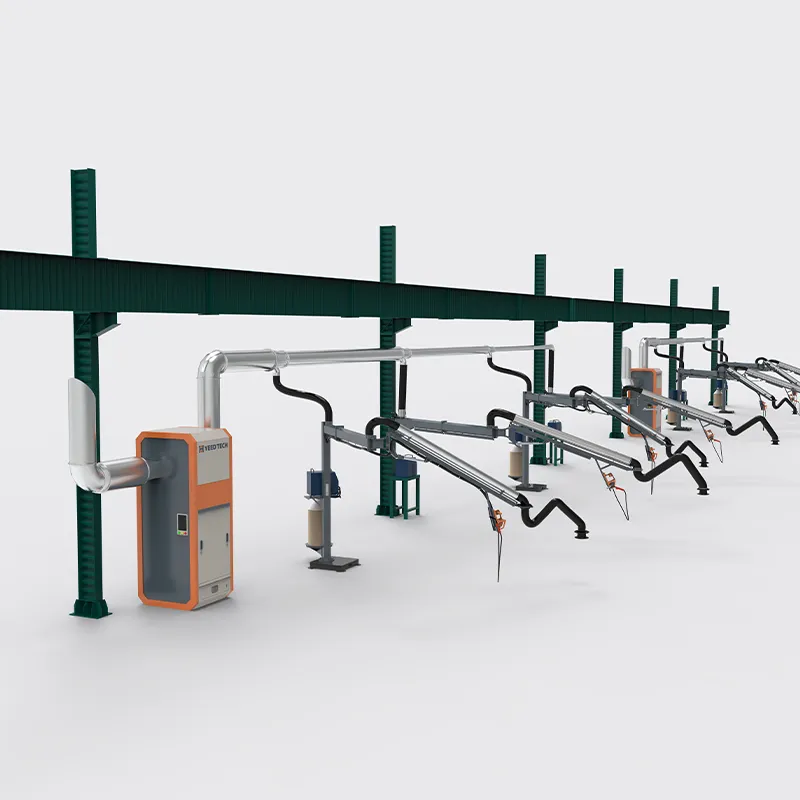
The versatility extends to integration with various filtration units, from portable systems to central extraction installations, ensuring a tailored solution for virtually any welding application.
Technical Advantages and ROI
Investing in a high-quality welding boom arm yields significant technical and economic advantages beyond mere regulatory compliance. These benefits contribute directly to enhanced operational efficiency, reduced overheads, and a stronger corporate reputation.
- Superior Fume Capture Efficiency: By capturing fumes at the source (around 15-30 cm from the welding arc), extraction arms achieve significantly higher capture rates compared to ambient ventilation systems, often exceeding 90-95% of airborne contaminants. This precision reduces the overall particulate load in the workshop air.
- Enhanced Workplace Safety & Health: Direct source capture dramatically minimizes welder exposure to harmful particulates (e.g., manganese, chromium, nickel oxides) and gases. This reduces the risk of respiratory diseases, metal fume fever, and other long-term health issues, contributing to a healthier workforce and reduced absenteeism.
- Increased Productivity and Comfort: Welders can work more comfortably and efficiently when not constantly exposed to fumes. The ergonomic design and effortless maneuverability of modern arms allow precise positioning with minimal effort, reducing physical strain and improving focus.
- Energy Cost Savings: Localized extraction requires moving and filtering a much smaller volume of air compared to general ventilation systems that filter an entire workshop. This translates into substantial energy savings on heating, ventilation, and air conditioning (HVAC) costs, especially in facilities where conditioned air is expelled.
- Compliance with Stricter Regulations: With ever-evolving occupational health standards, these arms help companies easily meet and even exceed regulatory requirements, avoiding potential fines, legal liabilities, and reputational damage.
- Protection of Equipment and Materials: By removing abrasive and corrosive welding fumes from the air, extraction arms help protect sensitive machinery, electronics, and even raw materials from particulate buildup and corrosion, extending equipment life and reducing maintenance costs.
While considering the initial welding fume extraction arm price, the long-term return on investment (ROI) from reduced energy consumption, improved worker health, increased productivity, and compliance benefits makes it a highly cost-effective solution for any serious industrial operation.
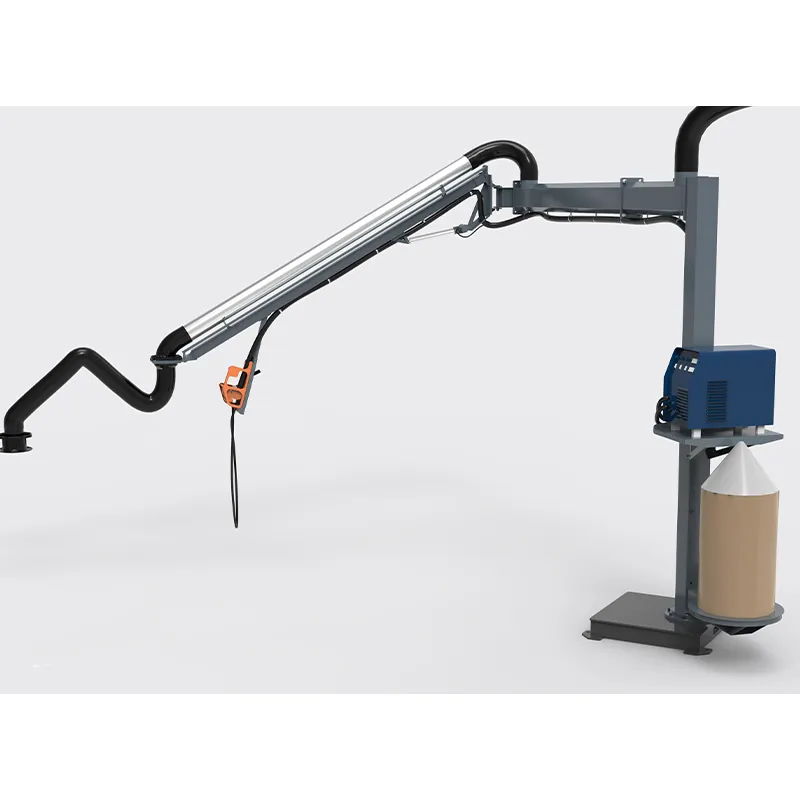
Vendor Comparison: Key Factors for Selection
Choosing the right vendor for a welding boom arm is a critical decision that impacts long-term operational efficiency and safety. While many suppliers offer extraction arms, discerning the differences in quality, performance, and support is paramount. Here’s a comparative framework:
Factors for Vendor Evaluation:
| Comparison Factor | High-Quality Vendor (e.g., Yeeeed) | Standard Vendor |
|---|---|---|
| Arm Construction & Materials | High-grade steel, CNC machined joints, multi-layer corrosion-resistant powder coating, flame-retardant hoses. Engineered for 10+ years. | Basic steel, stamped joints, single-layer paint, standard PVC hoses. Shorter lifespan, prone to rust. |
| Maneuverability & Ergonomics | Internal self-supporting mechanism, low-friction bearings, effortless 360-degree rotation, stable at any position. | External support springs, stiffer joints, limited rotation, may drift from set position over time. |
| Fume Capture Efficiency | Aerodynamically optimized hoods, high capture velocity profiles, designed for compliance with ISO 15012-1. | Basic hood designs, less efficient capture, often requiring closer positioning to the arc. |
| Customization & Integration | Offers custom arm lengths, special mounting solutions, integrated lighting, compatibility with various welding air filtration systems. | Limited standard sizes, fewer mounting options, generic integration capabilities. |
| After-Sales Support & Warranty | Comprehensive warranty (e.g., 2-5 years), readily available spare parts, expert technical support, maintenance programs. | Shorter warranty (e.g., 1 year), limited spare parts availability, basic support. |
| Certifications & Compliance | ISO 9001, CE, TUV, adherence to national and international air quality standards (e.g., OSHA, ACGIH). | May have basic certifications, but often lacks broader international compliance. |
While a higher initial welding fume extraction arm price from a premium vendor might seem significant, the long-term benefits in terms of durability, performance, reduced maintenance, and superior worker protection often outweigh the upfront cost. Choosing a reputable vendor ensures not just a product, but a complete solution supported by expertise and reliable service.
Customized Solutions for Unique Requirements
Recognizing that no two industrial environments are identical, we specialize in providing customized welding boom arm solutions. Standard models serve a broad range of applications, but specific operational challenges or architectural constraints often necessitate tailored designs. Our engineering team works closely with clients to develop extraction systems that precisely meet their unique demands.
Areas of Customization:
- Arm Length and Diameter: From compact arms for small workstations to extended-reach models spanning over 5 meters for large workpieces or multiple welding stations. Diameters can be adjusted for specific airflow requirements.
- Mounting Configurations: Beyond standard wall or ceiling mounts, we offer custom column mounts, rail-mounted trolley systems for extensive linear coverage, or integration into mobile filtration units.
- Hood Design: Specialized hood geometries for specific welding processes (e.g., larger hoods for MIG, narrower for TIG, transparent hoods for better visibility), or designs to accommodate integrated lighting or cameras.
- Material Specification: For highly corrosive environments (e.g., chemical plants, offshore platforms), arms can be fabricated from stainless steel or other specialized alloys, with enhanced coatings to withstand aggressive fumes and atmospheres.
- Integrated Features: Options include built-in LED lighting for improved visibility, sensor integration for automatic fan activation, or specialized nozzle attachments for unique fume sources.
- System Integration: Designing arms that seamlessly connect to existing or planned central welding air filtration systems, ensuring optimal airflow balance and filtration efficiency.
Our approach begins with a detailed site assessment and consultation to understand your operational needs, facility layout, and specific fume generation characteristics. This ensures that the custom solution not only performs optimally but also provides the best value over its extensive service life.
Application Case Studies & Client Success
The practical impact of a well-implemented welding boom arm solution is best demonstrated through real-world applications. Our clients across various industries have experienced significant improvements in workplace safety, air quality, and operational efficiency after integrating our systems.
Case Study 1: Large-Scale Shipyard Modernization
- Client: Major International Shipbuilder (Asia-Pacific Region)
- Challenge: Inadequate fume extraction in large ship block assembly areas, leading to high welder exposure and non-compliance with regional air quality standards. Traditional systems were inflexible and inefficient for massive structures.
- Solution: Design and installation of 40 custom-designed, ceiling-mounted extraction arms with extended reach (4.5 meters) and high-capacity fans, integrated into a centralized welding air filtration systems. Each arm was fitted with a wide-capture hood for optimal coverage during large-plate welding.
- Results: Post-installation air quality monitoring showed a 75% reduction in airborne particulate matter in welder breathing zones, significantly improving compliance. Welders reported vastly improved comfort and visibility, contributing to a 10% increase in productivity due to fewer breaks for fume dissipation. The client also noted a reduction in equipment maintenance related to abrasive dust.
Case Study 2: Precision Welding in Automotive Components
- Client: Automotive Tier-1 Supplier (European Union)
- Challenge: Manual precision TIG welding stations for critical safety components generated fine fumes, impacting worker health and potentially sensitive electronics in the vicinity. Space was constrained, requiring a compact yet effective solution.
- Solution: Implementation of 15 wall-mounted compact extraction arms (2.5-meter reach) with slim, transparent capture hoods and integrated LED lighting. These were connected to individual portable filtration units to maintain localized control and flexibility for workstation rearrangement.
- Results: The transparent hoods improved welder visibility, leading to better weld quality and fewer reworks. Airborne contaminant levels were reduced by over 85% at the source. The modular setup allowed the client to adapt to production layout changes seamlessly. The quick return on investment was also noted, particularly when evaluating against the welding fume extraction arm price versus the cost of potential health claims and product quality issues.
Google Compliance: Expertise, Authoritativeness, Trustworthiness
Our commitment to excellence in the field of industrial fume extraction is underpinned by rigorous adherence to global standards, extensive experience, and a steadfast dedication to customer satisfaction. We strive to provide solutions that embody expertise, authoritativeness, and trustworthiness.
Expertise & Authoritativeness:
- Certifications: Our manufacturing processes are ISO 9001 certified for quality management and ISO 14001 certified for environmental management. Products, including our welding boom arm, carry CE marking, signifying compliance with European safety, health, and environmental protection requirements.
- Industry Experience: With over two decades of specialized experience in industrial air purification and fume extraction systems, we have accumulated profound knowledge in designing and deploying effective solutions for the most challenging industrial environments.
- Strategic Partnerships: We collaborate with leading engineering firms, industrial integrators, and academic research institutions to continually innovate and refine our product offerings, ensuring they remain at the forefront of extraction technology.
- Performance Validation: All extraction arms undergo rigorous internal and independent third-party testing to validate performance parameters such as airflow, static pressure, and capture efficiency. Data consistently shows compliance with or exceeding established industry benchmarks like ACGIH (American Conference of Governmental Industrial Hygienists) recommendations for local exhaust ventilation.
Trustworthiness:
- Transparent Warranty: We stand behind the quality of our products with a comprehensive 2-year warranty on all structural components and a 1-year warranty on electrical components, ensuring peace of mind for our clients.
- Reliable Lead Times: For standard welding boom arm models, typical lead times range from 3-5 weeks from order confirmation. Custom solutions may require 6-10 weeks, depending on complexity. We maintain open communication throughout the fulfillment process.
- Dedicated Customer Support: Our after-sales support team is available via phone, email, and a dedicated online portal. We provide comprehensive installation guides, maintenance schedules, and prompt troubleshooting assistance to minimize downtime and ensure continuous operation.
- Parts & Service Availability: A full inventory of genuine spare parts is maintained, ensuring quick replacements for wear-and-tear components. We also offer planned maintenance contracts to maximize the lifespan and efficiency of your extraction systems.
Frequently Asked Questions (FAQ)
Q1: What is the optimal distance to position the extraction hood from the welding arc?
A1: For maximum efficiency, the hood should be positioned approximately 15-30 cm (6-12 inches) from the welding arc. This allows for effective capture of fumes before they disperse into the breathing zone.
Q2: How often do filters need to be replaced in a connected welding air filtration systems?
A2: Filter replacement frequency depends on the intensity of welding, the type of materials being welded, and the overall usage hours. As a general guideline, filters should be checked monthly and replaced when the pressure drop across the filter significantly increases, indicating it's clogged, or when the air quality output degrades.
Q3: Can a single welding boom arm serve multiple welding stations?
A3: While some extended-reach arms might technically cover a larger area, it is generally recommended to have one extraction arm per active welding station for optimal fume capture. Simultaneous welding at multiple points under a single arm will significantly reduce capture efficiency at each source.
Q4: What maintenance is required for the extraction arm itself?
A4: Routine maintenance includes checking hose integrity for leaks or damage, lubricating moving joints and bearings annually, inspecting the balance mechanism, and ensuring the hood is clean. Proper maintenance extends the service life and maintains optimal performance.
Q5: Are these arms suitable for exhaust gases from cutting processes (e.g., plasma cutting)?
A5: Yes, many welding boom arm models are highly effective for extracting fumes and particulates generated during plasma cutting, grinding, and other similar industrial processes. Ensure the arm and connected filtration system are rated for the specific type and volume of contaminants produced by the cutting operation.
Conclusion
The strategic implementation of a high-quality welding boom arm is no longer a luxury but a fundamental requirement for modern industrial operations. It represents a critical investment in workplace safety, regulatory compliance, and long-term operational sustainability. By providing highly effective, localized source capture of welding fumes, these sophisticated extraction arms protect valuable human capital, safeguard sensitive equipment, and contribute significantly to overall productivity and energy efficiency. As industries continue to evolve, demanding higher standards for air quality and worker well-being, the role of advanced fume extraction technology will only become more pronounced, solidifying its position as an indispensable asset in any serious fabrication or manufacturing environment.
References:
- American Conference of Governmental Industrial Hygienists (ACGIH). (2018). _Industrial Ventilation: A Manual of Recommended Practice for Design (30th ed.)_. ACGIH Press.
- Occupational Safety and Health Administration (OSHA). (2020). _Welding, Cutting, and Brazing: OSHA Fact Sheet_. U.S. Department of Labor.
- International Organization for Standardization (ISO). (2003). _ISO 15012-1:2004 - Health and safety in welding and allied processes -- Equipment for capturing and separating welding fume -- Part 1: Requirements for testing and marking of equipment_. ISO.
- European Agency for Safety and Health at Work (EU-OSHA). (2017). _Exposure to welding fumes in the EU: A review of prevalence, exposures and regulatory frameworks_. Publications Office of the European Union.
- Heidel, A., & Spagnola, R. (2015). _The effects of fume extraction on welder exposure and productivity_. Journal of Occupational and Environmental Hygiene, 12(4), D41-D47.
Latest News
-
Efficient automated hot air drying equipment for steel structure application
NewsApr.16,2026 -
Efficient hot air drying system for steel structure spraying line
NewsApr.09,2026 -
Optimizing Steel Structure Spraying with Hot Air Drying Technology Solutions
NewsApr.07,2026 -
HighEfficiency Hot Air Drying Painting Equipment for Superior Industrial Coatings
NewsApr.04,2026 -
Optimizing Industrial Processes with Hot Air Furnace Heating Spraying Systems
NewsMar.31,2026 -
Comprehensive Tailormade Steel Structure Spraying Solution for Enhanced Durability
NewsMar.28,2026 -
Optimizing Steel Structure Protection through Customization and Integration of Spraying System
NewsMar.26,2026


