


Looking for Structural Coating That Lasts—Faster, Cheaper?
What I’ve Learned About structural coating from the Factory Floor
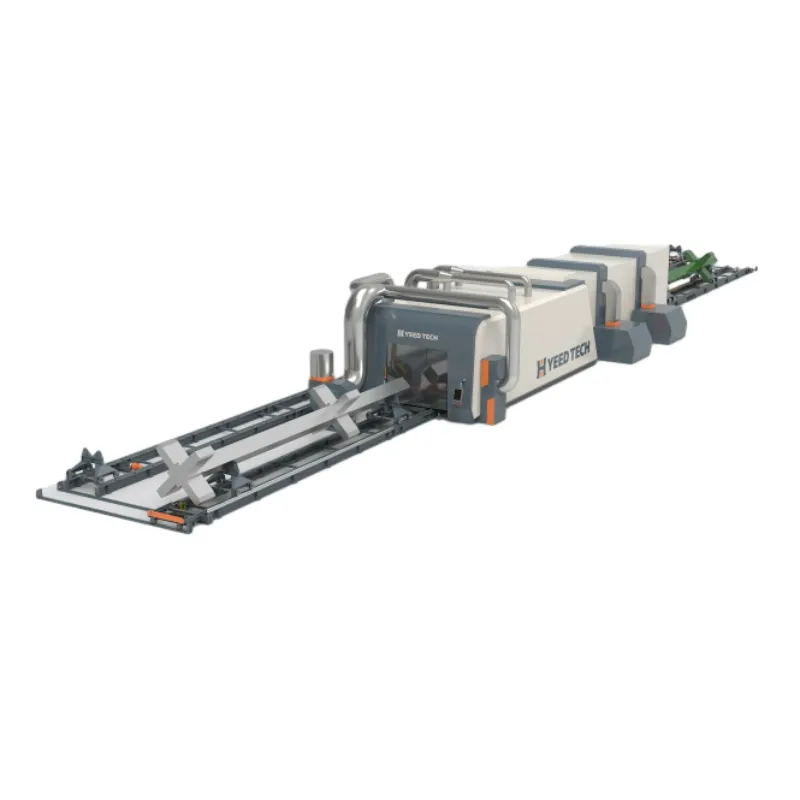
I’ve walked more paint halls than I can count, and—surprisingly—the best ones don’t scream “high-tech.” They feel calm, predictable, and a little boring. That’s a compliment. The Heavy Steel Structure Painting Line from Hebei (No.28, Wei’Er Road, Anping County, China) aims for exactly that: steady throughput, repeatable film builds, fewer reworks. It’s built for large, complex steel components—bridges, wind-tower sections, mining frames, you name it.
Industry pulse: lower VOCs, smarter curing, pragmatic automation
Right now the arc is obvious: low-VOC and high-solids systems, tighter environmental capture, and automation that doesn’t annoy operators. Many customers say they want energy savings, but, to be honest, they’ll still pick uptime over fancy dashboards. This line sits in that middle lane—modern enclosure, filtration, and controls, yet serviceable hardware you can actually fix on a Friday night. And yes, structural coating performance is only as good as surface prep and cure control; the line doesn’t pretend otherwise.
Typical process flow (real-world, not lab-perfect)
- Abrasive blast: steel grit G40/G50 to ISO 8501-1 Sa 2.5; profile ≈ 50–85 μm.
- Clean/dust-off: conductivity check; salts ≤ 20 mg/m² (per ISO 8502 series).
- Primer: airless spray, 2K zinc-rich (HS); target DFT ≈ 60–80 μm.
- Intermediate: epoxy HS, DFT ≈ 150–200 μm; optional stripe coat on edges.
- Finish: polysiloxane or PU; DFT ≈ 60–100 μm; gloss as specified.
- Curing: forced air or low-temp bake; RH and substrate temp monitored.
- QC: DFT per SSPC-PA 2/ISO 19840, adhesion ASTM D3359/D4541, holiday test as required.
| Spec (≈ real use) | Heavy Steel Structure Painting Line |
|---|---|
| Workpiece envelope | ≈ 20–30 m length, 4–6 m height (customizable) |
| Conveyance | Floor trolley or overhead chain; variable speed |
| Spray method | Airless/air-assisted; plural-component pumps (2K/3K) |
| DFT control | Target 200–400 μm total; ISO 19840 sampling |
| Filtration/VOC | Dry filter + optional RTO; capture efficiency ≈ 95%+ |
| Safety | Explosion-proof fans/lighting; interlocks; LEL monitoring |
| Service life target | C4–C5 environments 15–25 years with proper structural coating system (ISO 12944) |
Where it fits (and why operators don’t hate it)
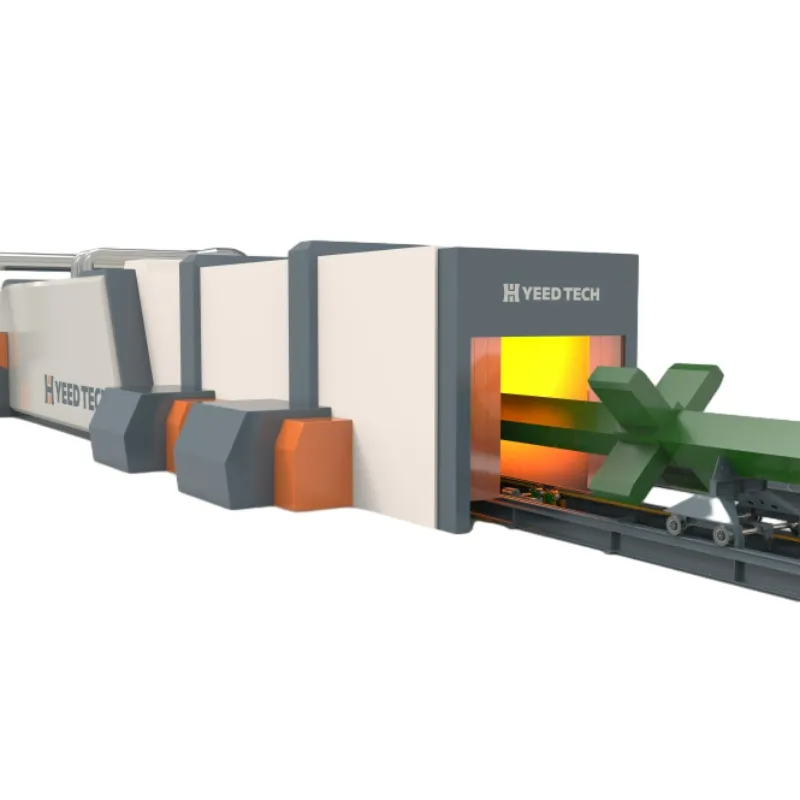
Application scenarios: bridge beams, offshore jackets, wind towers, port cranes, heavy trailers. Advantages include stable DFT, less overspray drift, faster color changeover (if you spec good manifolds), and better ergonomics. Operators told me the gun balance and lighting are “actually decent,” which is rarer than you think.
Vendor snapshot (shortlist view)
| Vendor | Strengths | Trade-offs |
|---|---|---|
| YEEEE Heavy Steel Line (Hebei) | Custom envelopes; pragmatic pricing; fast spares | UI less flashy; documentation varies by project |
| EU Brand A | Top-tier controls; advanced analytics | Higher capex; longer lead time |
| Local Integrator B | Lowest cost; quick on-site tweaks | Inconsistent QA; limited VOC abatement options |
Testing, certifications, and the boring stuff that saves you later
Expect DFT checks (ISO 19840/SSPC-PA 2), adhesion (ASTM D3359 X-cut; pull-off ASTM D4541), and surface cleanliness to ISO 8501-1. Many shops also log dew point and substrate temperature each shift. CE-compliant panels and explosion-proof components are standard; ATEX/IECEx options can be specified—real-world availability may vary by region.
A recent wind-tower user reported adhesion 4B–5B on cured epoxy and average system DFT ≈ 320 μm, passing salt-spray screening to 1,000 h with no blisters in scribe creep limits. Not a miracle—just good prep and controlled cure. That’s the essence of dependable structural coating.
Customization and support
Options include robotic assist on repetitive passes, heat-assisted flash-off, quick-change gun manifolds, and RTO sizing for tighter VOC caps. Service is straightforward: remote diagnostics plus local partners. Lead times are reasonable (I guess 10–16 weeks for typical builds), but big booths can stretch that.
Mini case notes
- Bridge fabricator cut rework by ≈30% after instituting ISO 19840 DFT checkpoints.
- Port crane OEM switched to polysiloxane finish—kept gloss longer in C5-M nearshore.
- Wind components plant reduced solvent use ≈18% with better atomization settings.
Bottom line: if you chase neat dashboards over airflow, you’ll lose. Get airflow, prep, and cure right, and your structural coating behaves—quietly.
References
- ISO 12944 (Parts 1–9): Paints and varnishes — Corrosion protection of steel structures.
- ISO 8501-1 / ISO 8502 series: Surface preparation and soluble salt testing.
- SSPC-PA 2 / ISO 19840: Measurement of dry coating thickness on steel substrates.
- ASTM D3359, ASTM D4541: Adhesion by tape test and pull-off methods.
Latest News
-
Efficient automated hot air drying equipment for steel structure application
NewsApr.16,2026 -
Efficient hot air drying system for steel structure spraying line
NewsApr.09,2026 -
Optimizing Steel Structure Spraying with Hot Air Drying Technology Solutions
NewsApr.07,2026 -
HighEfficiency Hot Air Drying Painting Equipment for Superior Industrial Coatings
NewsApr.04,2026 -
Optimizing Industrial Processes with Hot Air Furnace Heating Spraying Systems
NewsMar.31,2026 -
Comprehensive Tailormade Steel Structure Spraying Solution for Enhanced Durability
NewsMar.28,2026 -
Optimizing Steel Structure Protection through Customization and Integration of Spraying System
NewsMar.26,2026


