


Flexible Welding Boom Arm: Superior Fume Extraction
The Indispensable Role of the welding boom arm in Modern Industrial Environments
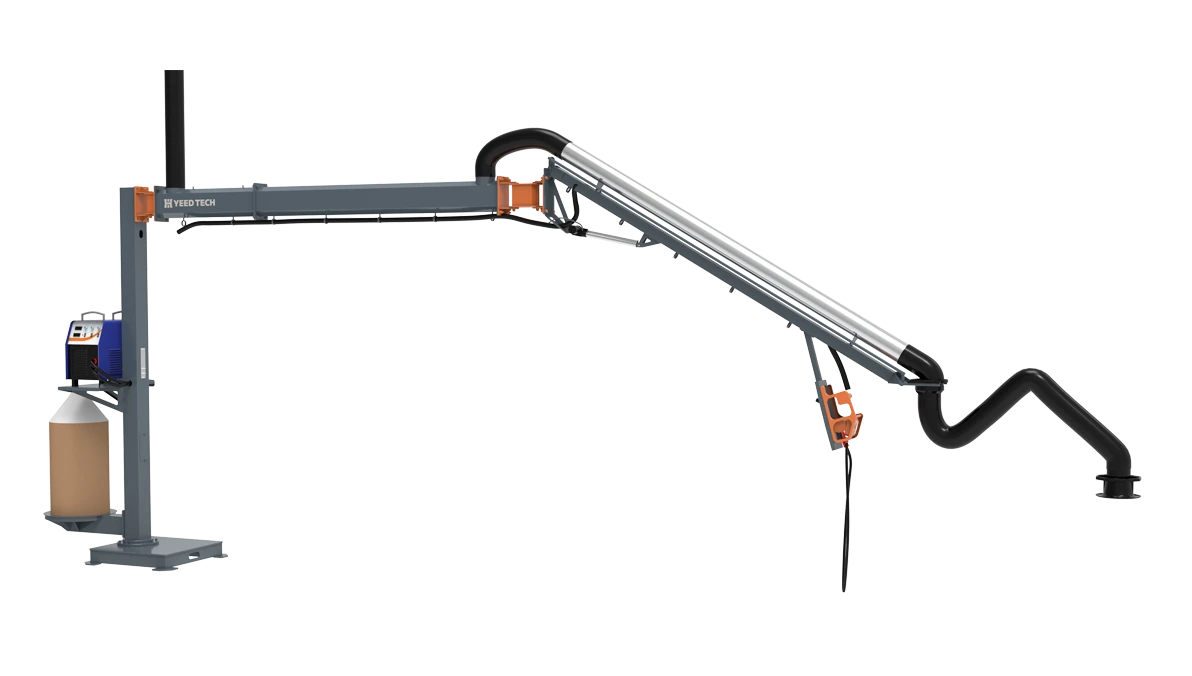
In contemporary industrial welding operations, ensuring worker safety and compliance with environmental regulations is paramount. The welding boom arm stands as a critical component of advanced welding air filtration systems, designed to effectively capture hazardous fumes and particulate matter directly at the source. This article delves into the technical intricacies, application diversity, and strategic importance of these specialized extraction systems, offering insights for B2B decision-makers seeking to optimize their operational health and safety protocols.
Modern manufacturing demands not only precision and efficiency but also a steadfast commitment to workplace well-being. The evolution of welding technology has been accompanied by a parallel development in fume extraction, making devices like the welding boom arm integral to creating healthier working environments. These systems are crucial for managing exposure to airborne contaminants, which include various metal oxides, silicates, fluorides, and other hazardous gases that arise during welding processes.
Industry Trends and Market Dynamics for Fume Extraction
The global market for industrial fume extraction systems, including advanced welding boom arm solutions, is experiencing robust growth. Driven by increasingly stringent occupational health and safety regulations (e.g., OSHA, EU Directives), growing awareness of long-term health risks associated with welding fumes, and technological advancements, demand continues to surge. According to a report by Grand View Research, the global industrial air filtration market size was valued at USD 10.7 billion in 2022 and is projected to expand at a compound annual growth rate (CAGR) of 6.3% from 2023 to 2030, with fume and smoke extractors representing a significant segment. This growth is particularly noticeable in emerging economies and sectors undergoing rapid industrialization.
Key trends influencing the adoption of high-performance welding boom arm units include the integration of IoT for predictive maintenance, enhanced energy efficiency through optimized fan and motor designs, and the development of multi-stage filtration units capable of handling diverse contaminant profiles. There's also a growing preference for modular and flexible systems that can be easily adapted to different workshop layouts and welding processes, from MIG/MAG to TIG and plasma cutting.
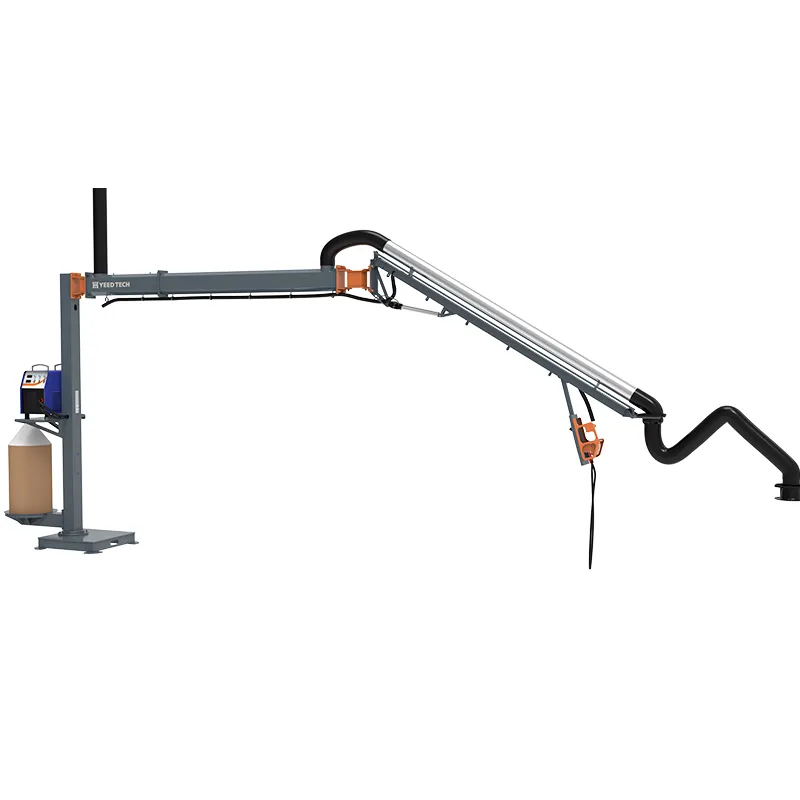
Manufacturing Process of a Welding Fume Extraction Arm
Materials and Structural Design
The robust construction of a welding boom arm begins with the selection of high-grade materials optimized for durability, corrosion resistance, and operational stability. Typically, the arm's structure is fabricated from powder-coated steel or aluminum, ensuring both strength and a clean finish that resists wear and chemical degradation. The internal ducting and joints are often made from corrosion-resistant aluminum or high-density polypropylene (PP) to withstand aggressive fume compositions, particularly those containing acids or alkalis.
- Structural Components: High-strength steel alloys (e.g., Q235B, S235JR) for main support structures and mounting brackets, often treated with electro-galvanization or powder coating for enhanced environmental resilience.
- Ducting and Joints: Anodized aluminum or reinforced composite materials (e.g., PVC-coated fabric hose over steel wire helix, or PP tubing) for flexibility, chemical resistance, and minimal pressure drop.
- Hood/Nozzle: High-impact, heat-resistant plastic (e.g., ABS, PC) or painted steel, designed for optimal fume capture velocity and user ergonomics.
Manufacturing Process Flow
The manufacturing of a sophisticated welding gas extractor involves several precision-engineered steps:
- Material Preparation: Raw materials undergo initial cutting, shaping, and deburring using automated machinery to ensure precise dimensions. Steel components for the boom’s skeletal structure may involve laser cutting or plasma cutting for intricate shapes.
- Component Fabrication:
- Casting/Forging: For critical joint components or heavy-duty bases, casting (e.g., aluminum alloy die-casting) or forging processes are employed to achieve high mechanical strength and dimensional stability.
- CNC Machining: Precision machining is applied to critical connection points, swivel mechanisms, and internal valve components. This ensures tight tolerances for smooth operation and airtight seals.
- Sheet Metal Forming: Duct segments, mounting plates, and external housings are typically formed using bending machines and presses.
- Surface Treatment: Metal parts are subjected to thorough cleaning, degreasing, and phosphating before receiving a protective coating. Electrostatic powder coating is common for exterior surfaces, offering superior chip, scratch, and corrosion resistance compared to liquid paint.
- Assembly: Sub-assemblies (e.g., joint mechanisms, damper controls) are built first, then integrated into the main arm structure. Robotic assistance may be used for repetitive tasks, while skilled technicians ensure the correct alignment and functionality of all moving parts.
- Testing and Quality Assurance:
- Leakage Testing: Each welding boom arm undergoes rigorous leakage testing using pressure differential methods to ensure no air bypasses the intended extraction path.
- Functionality Testing: Articulation, balance, damper control, and overall maneuverability are tested across the full range of motion.
- Performance Testing: Airflow volume and capture velocity are measured at various points to verify compliance with design specifications and industry standards like ISO 15012-1 (Health and safety in welding and allied processes – Equipment for capture and separation of welding fume – Part 1: Requirements for testing and marking of equipment) and ANSI/AWS F1.5 (Methods for sampling airborne particles generated by welding and allied processes).
- Packaging and Shipping: Finished products are carefully packed to prevent damage during transit, often with custom-fitted foam or bracing.
Service Life and Target Industries
A well-engineered welding boom arm is designed for a service life exceeding 10-15 years under normal operating conditions, often backed by extended warranties for critical components. This longevity is achieved through robust material selection, precision manufacturing, and adherence to international quality standards.
Target industries include:
- Petrochemical: For fabrication of pipelines, storage tanks, and structural components where specialized alloys are welded.
- Metallurgy: Foundries, steel mills, and metal fabrication shops dealing with heavy-duty welding.
- Automotive: Body shops, assembly lines, and repair facilities requiring precise fume control.
- Shipbuilding: Large-scale structural welding in confined spaces.
- Heavy Equipment Manufacturing: Production of construction machinery, agricultural equipment, and industrial vehicles.
- Educational & Vocational Institutions: Providing safe learning environments for welding students.
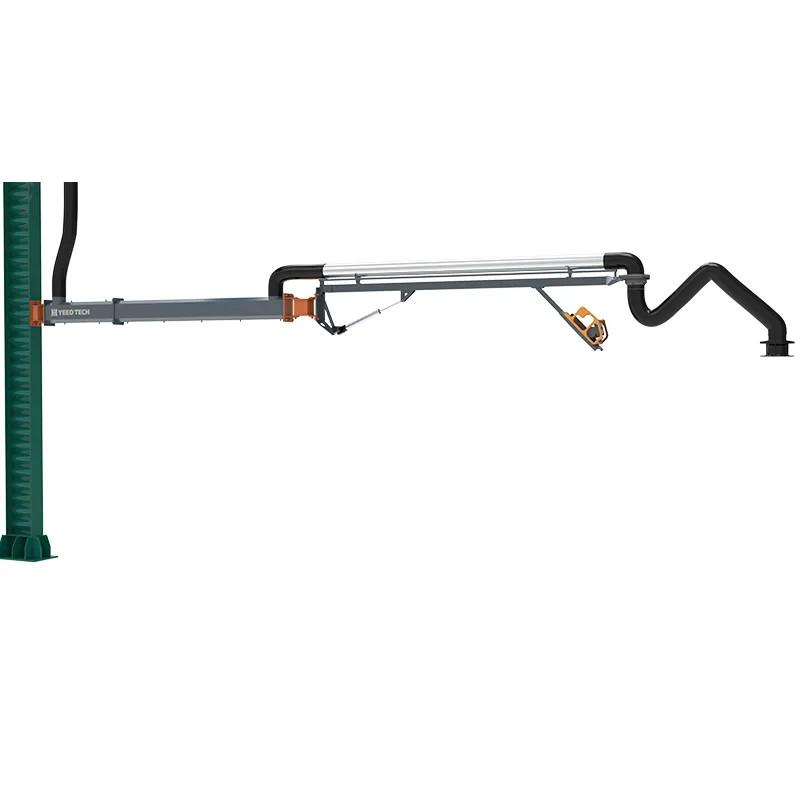
Technical Specifications and Performance Parameters
The effectiveness of a welding boom arm is defined by its technical specifications. Key parameters include arm length and reach, diameter of the extraction hose, airflow capacity (m³/h or CFM), static pressure, and the efficiency of associated filtration units.
Product Specification Table: Yeeeed Welding Fume Extraction Arm
These specifications are crucial for matching the right welding fume extraction arm price to specific operational needs, ensuring optimal performance and compliance.
Application Scenarios and Technical Advantages
Versatile Application Scenarios
The adaptability of the welding boom arm allows its deployment across a broad spectrum of welding and allied processes:
- Manual Arc Welding (SMAW/MIG/TIG): Direct capture of fumes from various arc welding techniques, ensuring localized air purification.
- Grinding and Polishing: Effective at capturing particulate matter generated during surface preparation and finishing stages.
- Plasma Cutting and Oxy-Fuel Cutting: Managing the intense smoke and particulate load from thermal cutting processes.
- Robotic Welding Cells: Specialized configurations can be integrated into robotic cells, providing automated fume capture without impeding robot movement.
- Maintenance and Repair Workshops: Essential for intermittently used stations where flexibility and rapid deployment are key.
Key Technical Advantages
- Superior Fume Capture: Positioned directly at the source, these arms achieve capture efficiencies significantly higher than ambient air filtration systems, often exceeding 95% for particulate matter. This minimizes the spread of hazardous fumes throughout the workspace.
- Energy Saving: By focusing extraction only where needed, the volume of air requiring filtration is reduced, leading to smaller fan units and lower energy consumption compared to general ventilation systems. Energy-efficient motors and variable frequency drives (VFDs) further optimize power usage, contributing to significant operational cost savings over the equipment's lifespan.
- Corrosion Resistance: Utilizing materials like anodized aluminum and powder-coated steel, these arms withstand corrosive environments common in welding, ensuring prolonged operational integrity and reduced maintenance needs.
- Ergonomics and Maneuverability: Engineered with smooth-moving joints and internal balancing mechanisms, operators can easily position the hood without excessive effort, reducing strain and improving workflow. The external framework minimizes internal resistance, ensuring consistent airflow.
- Modular Design: Most welding air filtration systems with boom arms offer modular components, allowing for easy expansion, repair, or adaptation to changing production needs. This reduces downtime and enhances investment protection.
- Enhanced Safety: Direct fume capture drastically reduces welder exposure to harmful particulates and gases, mitigating risks of respiratory illnesses, metal fume fever, and other long-term health issues. Compliance with health and safety regulations is therefore more easily achieved.
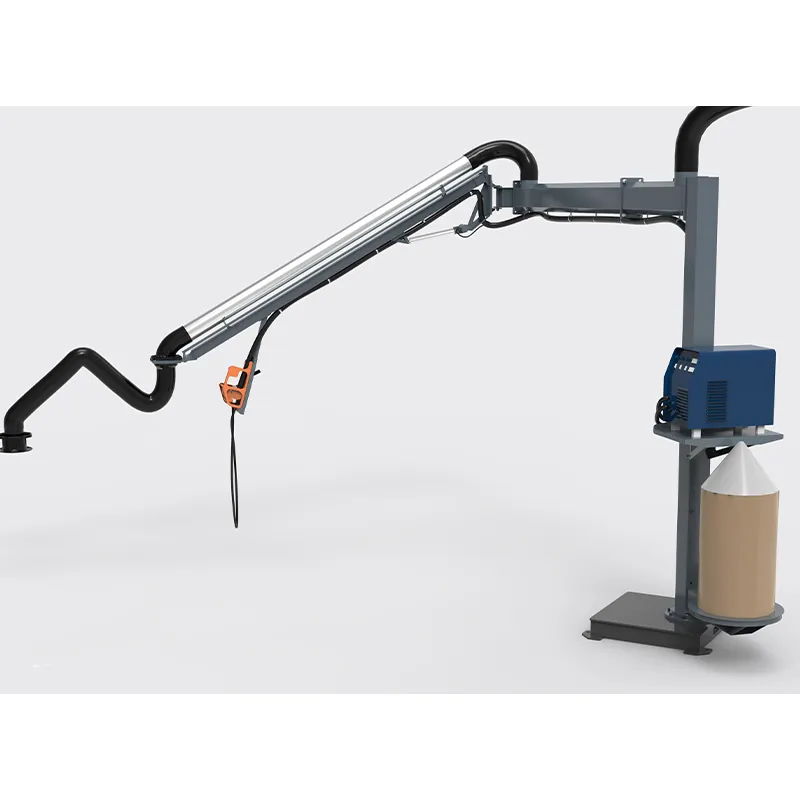
Vendor Comparison: Selecting the Right Welding Fume Extraction Arm
Choosing the optimal welding boom arm involves evaluating several vendors based on reputation, product range, technological innovation, and after-sales support. While many manufacturers offer similar basic functionality, key differentiators lie in construction quality, advanced features, and comprehensive service packages.
Comparison Factors:
- Build Quality and Materials: Look for robust construction, high-grade alloys, and durable coatings that withstand harsh industrial environments.
- Maneuverability and Balance: Superior arms offer effortless positioning and maintain their set position without drift, improving welder comfort and efficiency.
- Integration Capabilities: Compatibility with various fume extractors, centralized systems, and robotic cells.
- Maintenance and Filter Access: Ease of maintenance, especially filter replacement, directly impacts operational costs and uptime.
- Certifications and Compliance: Adherence to international standards (e.g., ISO, CE, UL) indicates a commitment to quality and safety.
- Customization Options: The ability to tailor arm lengths, hood designs, and mounting solutions to specific application needs.
- Price vs. Value (Welding Fume Extraction Arm Price): While cost is a factor, focus on the total cost of ownership, including energy efficiency, durability, and maintenance.
Leading Vendors and Their Differentiators (Illustrative Comparison):
Customized Solutions and Case Studies
Tailoring the Solution to Specific Needs
Recognizing that no two industrial environments are identical, vendors like Yeeeed specialize in offering customized welding boom arm solutions. This can range from adjusting arm lengths and diameters to integrating specialized hoods for unique welding processes (e.g., large-diameter pipes, intricate assemblies) or challenging access points. Customization also extends to mounting options (e.g., trolley-mounted for portability, fixed floor mounts for heavy-duty applications, or multiple arms on a single rail system for extensive work areas) and materials for extreme conditions (e.g., stainless steel for corrosive chemical environments).
For complex setups, detailed engineering consultations are provided to design a system that optimizes capture efficiency, minimizes airflow resistance, and integrates seamlessly with existing infrastructure, including centralized welding air filtration systems or individual mobile extractors.
Application Case Studies: Real-World Impact
Case Study 1: Large-Scale Shipbuilding Yard
- Challenge: A major shipbuilding client faced significant challenges in managing welding fumes across vast, open fabrication halls and confined spaces within ship blocks. Existing ambient ventilation was insufficient, leading to poor air quality and welder complaints.
- Solution: Yeeeed deployed a combination of 4-meter and 5-meter welding boom arm units, integrated with a centralized fume extraction system. Wall-mounted arms were strategically placed along fabrication lines, while mobile units with longer arms were utilized for welding inside ship compartments. Custom conical hoods were designed for enhanced capture during heavy-duty welding.
- Results: Post-installation air quality tests showed a reduction of respirable particulate matter by over 90% at the welder's breathing zone, exceeding ISO 15012-1 requirements. The improved air quality led to a reported 20% increase in welder productivity and a significant reduction in sick leave related to respiratory issues. The client noted substantial energy savings due to localized extraction compared to their previous general ventilation approach.
Case Study 2: Automotive Component Manufacturing Plant
- Challenge: An automotive supplier specializing in exhaust systems experienced high concentrations of nickel and chromium fumes from MIG welding stainless steel, posing significant health risks and requiring frequent, costly filter changes in their less efficient mobile extractors.
- Solution: Yeeeed supplied a series of 3-meter welding boom arm units connected to a self-cleaning cartridge filter system. The arms featured high-efficiency capture hoods, and the extraction system was equipped with an automatic pulse-jet cleaning mechanism for extended filter life.
- Results: The facility achieved full compliance with local exposure limits for hazardous metals. Filter lifespan increased by 150%, drastically reducing maintenance costs and downtime. Welders reported greater comfort and visibility, attributing to higher quality welds and fewer reworks. The "welding fume extraction arm price" was justified by the long-term operational savings and improved worker health metrics.
Trustworthiness and Support
Frequently Asked Questions (FAQ)
- Q: What is the optimal distance for positioning the welding boom arm hood from the welding arc?
- A: For maximum capture efficiency, the hood should be positioned 15-30 cm (6-12 inches) from the welding arc. The exact distance may vary based on the specific welding process, material, and the arm's airflow capacity.
- Q: Can a single welding gas extractor support multiple boom arms?
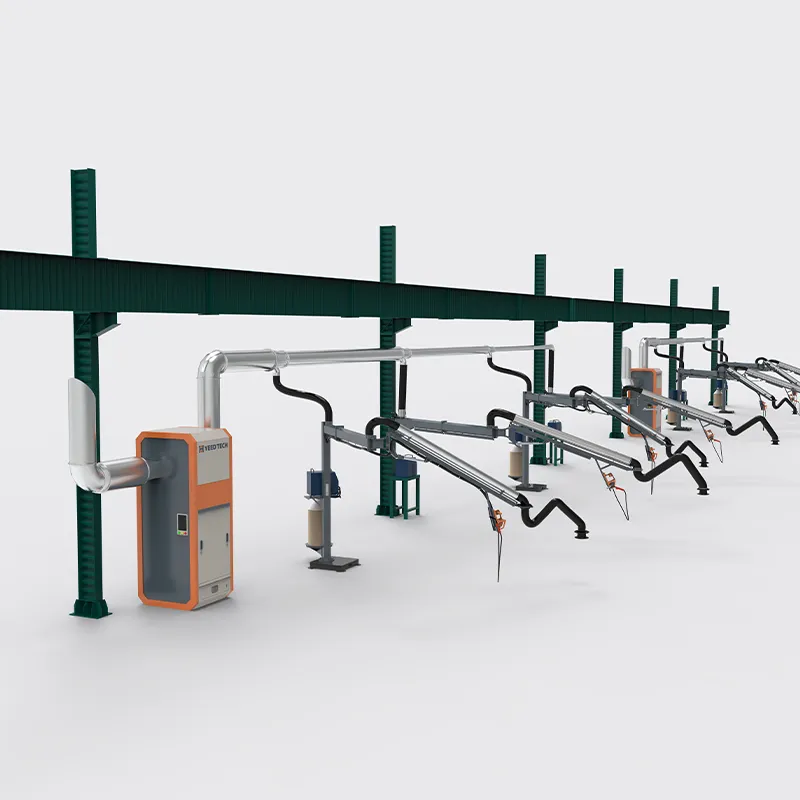
- A: Yes, centralized extraction systems are designed to support multiple welding boom arm units simultaneously. The system's fan capacity and ducting design must be appropriately sized to ensure adequate airflow for all connected arms, often with individual dampers for airflow control at each station.
- Q: What is the maintenance schedule for a welding boom arm?
- A: Routine maintenance involves checking the condition of the flexible hose, verifying the smooth movement of joints, and inspecting the damper for proper function. This should be done weekly or monthly depending on usage. If connected to a filtration unit, filter replacement schedules will be determined by the type of filter and the intensity of welding operations, usually indicated by a pressure gauge.
- Q: Are your products certified to international safety standards?
- A: Yes, Yeeeed's welding air filtration systems and boom arms are designed and manufactured to comply with stringent international standards including ISO 9001 for quality management, CE marking for European safety, and relevant OSHA guidelines. Our systems meet or exceed the performance requirements specified in ISO 15012-1 for welding fume extraction equipment.
Lead Time and Fulfillment
Standard welding boom arm configurations typically have a lead time of 2-4 weeks from order confirmation, depending on current stock levels and production schedules. For customized solutions or large-scale projects, lead times may extend to 6-10 weeks, which includes detailed engineering, specialized material procurement, and manufacturing. We maintain efficient logistics partnerships to ensure timely and secure global delivery. Expedited shipping options are available upon request.
Warranty Commitments
Yeeeed stands behind the quality and durability of its products. All welding boom arm units come with a standard 2-year warranty covering manufacturing defects and material failures. Extended warranty options are available for critical components or for projects requiring prolonged assurance. Our commitment is to ensure operational reliability and customer satisfaction.
Customer Support and After-Sales Service
Our dedicated customer support team provides comprehensive assistance from initial consultation through installation and beyond. This includes:
- Technical Consultation: Expert advice on system design, sizing, and integration.
- Installation Guidance: Detailed manuals and remote support for proper setup.
- Maintenance and Troubleshooting: Access to experienced technicians for any operational issues.
- Spare Parts Availability: A readily available inventory of replacement parts to minimize downtime.
- Training Programs: On-site or remote training for operators and maintenance personnel to ensure safe and efficient system use.
Conclusion
The welding boom arm is more than just a piece of equipment; it is a vital investment in workplace safety, operational efficiency, and environmental compliance. Its sophisticated design, robust construction, and ability to precisely target hazardous fumes make it an indispensable tool in modern industrial settings. By carefully considering technical specifications, customization options, and the total value offered by vendors, businesses can implement extraction solutions that not only protect their most valuable asset—their workforce—but also contribute to long-term profitability and sustainable operations. As regulatory pressures intensify and awareness of occupational health grows, the demand for advanced welding air filtration systems, powered by efficient boom arms, will only continue to rise, solidifying their role as cornerstones of safe industrial practices.
References
- International Organization for Standardization. ISO 15012-1:2013, Health and safety in welding and allied processes – Equipment for capture and separation of welding fume – Part 1: Requirements for testing and marking of equipment.
- American Welding Society. ANSI/AWS F1.5:2019, Methods for Sampling Airborne Particles Generated by Welding and Allied Processes.
- Grand View Research. Industrial Air Filtration Market Size, Share & Trends Analysis Report By Product (Dust Collectors, Fume & Smoke Extractors), By Application, By Region, And Segment Forecasts, 2023 - 2030.
- Occupational Safety and Health Administration (OSHA). 29 CFR 1910.252, General requirements for welding, cutting, and brazing.
Latest News
-
Efficient automated hot air drying equipment for steel structure application
NewsApr.16,2026 -
Efficient hot air drying system for steel structure spraying line
NewsApr.09,2026 -
Optimizing Steel Structure Spraying with Hot Air Drying Technology Solutions
NewsApr.07,2026 -
HighEfficiency Hot Air Drying Painting Equipment for Superior Industrial Coatings
NewsApr.04,2026 -
Optimizing Industrial Processes with Hot Air Furnace Heating Spraying Systems
NewsMar.31,2026 -
Comprehensive Tailormade Steel Structure Spraying Solution for Enhanced Durability
NewsMar.28,2026 -
Optimizing Steel Structure Protection through Customization and Integration of Spraying System
NewsMar.26,2026
Flexible Welding Boom Arm: Superior Fume Extraction
The Indispensable Role of the welding boom arm in Modern Industrial Environments
In contemporary industrial welding operations, ensuring worker safety and compliance with environmental regulations is paramount. The welding boom arm stands as a critical component of advanced welding air filtration systems, designed to effectively capture hazardous fumes and particulate matter directly at the source. This article delves into the technical intricacies, application diversity, and strategic importance of these specialized extraction systems, offering insights for B2B decision-makers seeking to optimize their operational health and safety protocols.
Modern manufacturing demands not only precision and efficiency but also a steadfast commitment to workplace well-being. The evolution of welding technology has been accompanied by a parallel development in fume extraction, making devices like the welding boom arm integral to creating healthier working environments. These systems are crucial for managing exposure to airborne contaminants, which include various metal oxides, silicates, fluorides, and other hazardous gases that arise during welding processes.
Industry Trends and Market Dynamics for Fume Extraction
The global market for industrial fume extraction systems, including advanced welding boom arm solutions, is experiencing robust growth. Driven by increasingly stringent occupational health and safety regulations (e.g., OSHA, EU Directives), growing awareness of long-term health risks associated with welding fumes, and technological advancements, demand continues to surge. According to a report by Grand View Research, the global industrial air filtration market size was valued at USD 10.7 billion in 2022 and is projected to expand at a compound annual growth rate (CAGR) of 6.3% from 2023 to 2030, with fume and smoke extractors representing a significant segment. This growth is particularly noticeable in emerging economies and sectors undergoing rapid industrialization.
Key trends influencing the adoption of high-performance welding boom arm units include the integration of IoT for predictive maintenance, enhanced energy efficiency through optimized fan and motor designs, and the development of multi-stage filtration units capable of handling diverse contaminant profiles. There's also a growing preference for modular and flexible systems that can be easily adapted to different workshop layouts and welding processes, from MIG/MAG to TIG and plasma cutting.
Manufacturing Process of a Welding Fume Extraction Arm
Materials and Structural Design
The robust construction of a welding boom arm begins with the selection of high-grade materials optimized for durability, corrosion resistance, and operational stability. Typically, the arm's structure is fabricated from powder-coated steel or aluminum, ensuring both strength and a clean finish that resists wear and chemical degradation. The internal ducting and joints are often made from corrosion-resistant aluminum or high-density polypropylene (PP) to withstand aggressive fume compositions, particularly those containing acids or alkalis.
- Structural Components: High-strength steel alloys (e.g., Q235B, S235JR) for main support structures and mounting brackets, often treated with electro-galvanization or powder coating for enhanced environmental resilience.
- Ducting and Joints: Anodized aluminum or reinforced composite materials (e.g., PVC-coated fabric hose over steel wire helix, or PP tubing) for flexibility, chemical resistance, and minimal pressure drop.
- Hood/Nozzle: High-impact, heat-resistant plastic (e.g., ABS, PC) or painted steel, designed for optimal fume capture velocity and user ergonomics.
Manufacturing Process Flow
The manufacturing of a sophisticated welding gas extractor involves several precision-engineered steps:
- Material Preparation: Raw materials undergo initial cutting, shaping, and deburring using automated machinery to ensure precise dimensions. Steel components for the boom’s skeletal structure may involve laser cutting or plasma cutting for intricate shapes.
- Component Fabrication:
- Casting/Forging: For critical joint components or heavy-duty bases, casting (e.g., aluminum alloy die-casting) or forging processes are employed to achieve high mechanical strength and dimensional stability.
- CNC Machining: Precision machining is applied to critical connection points, swivel mechanisms, and internal valve components. This ensures tight tolerances for smooth operation and airtight seals.
- Sheet Metal Forming: Duct segments, mounting plates, and external housings are typically formed using bending machines and presses.
- Surface Treatment: Metal parts are subjected to thorough cleaning, degreasing, and phosphating before receiving a protective coating. Electrostatic powder coating is common for exterior surfaces, offering superior chip, scratch, and corrosion resistance compared to liquid paint.
- Assembly: Sub-assemblies (e.g., joint mechanisms, damper controls) are built first, then integrated into the main arm structure. Robotic assistance may be used for repetitive tasks, while skilled technicians ensure the correct alignment and functionality of all moving parts.
- Testing and Quality Assurance:
- Leakage Testing: Each welding boom arm undergoes rigorous leakage testing using pressure differential methods to ensure no air bypasses the intended extraction path.
- Functionality Testing: Articulation, balance, damper control, and overall maneuverability are tested across the full range of motion.
- Performance Testing: Airflow volume and capture velocity are measured at various points to verify compliance with design specifications and industry standards like ISO 15012-1 (Health and safety in welding and allied processes – Equipment for capture and separation of welding fume – Part 1: Requirements for testing and marking of equipment) and ANSI/AWS F1.5 (Methods for sampling airborne particles generated by welding and allied processes).
- Packaging and Shipping: Finished products are carefully packed to prevent damage during transit, often with custom-fitted foam or bracing.
Service Life and Target Industries
A well-engineered welding boom arm is designed for a service life exceeding 10-15 years under normal operating conditions, often backed by extended warranties for critical components. This longevity is achieved through robust material selection, precision manufacturing, and adherence to international quality standards.
Target industries include:
- Petrochemical: For fabrication of pipelines, storage tanks, and structural components where specialized alloys are welded.
- Metallurgy: Foundries, steel mills, and metal fabrication shops dealing with heavy-duty welding.
- Automotive: Body shops, assembly lines, and repair facilities requiring precise fume control.
- Shipbuilding: Large-scale structural welding in confined spaces.
- Heavy Equipment Manufacturing: Production of construction machinery, agricultural equipment, and industrial vehicles.
- Educational & Vocational Institutions: Providing safe learning environments for welding students.
Technical Specifications and Performance Parameters
The effectiveness of a welding boom arm is defined by its technical specifications. Key parameters include arm length and reach, diameter of the extraction hose, airflow capacity (m³/h or CFM), static pressure, and the efficiency of associated filtration units.
Product Specification Table: Yeeeed Welding Fume Extraction Arm
These specifications are crucial for matching the right welding fume extraction arm price to specific operational needs, ensuring optimal performance and compliance.
Application Scenarios and Technical Advantages
Versatile Application Scenarios
The adaptability of the welding boom arm allows its deployment across a broad spectrum of welding and allied processes:
- Manual Arc Welding (SMAW/MIG/TIG): Direct capture of fumes from various arc welding techniques, ensuring localized air purification.
- Grinding and Polishing: Effective at capturing particulate matter generated during surface preparation and finishing stages.
- Plasma Cutting and Oxy-Fuel Cutting: Managing the intense smoke and particulate load from thermal cutting processes.
- Robotic Welding Cells: Specialized configurations can be integrated into robotic cells, providing automated fume capture without impeding robot movement.
- Maintenance and Repair Workshops: Essential for intermittently used stations where flexibility and rapid deployment are key.
Key Technical Advantages
- Superior Fume Capture: Positioned directly at the source, these arms achieve capture efficiencies significantly higher than ambient air filtration systems, often exceeding 95% for particulate matter. This minimizes the spread of hazardous fumes throughout the workspace.
- Energy Saving: By focusing extraction only where needed, the volume of air requiring filtration is reduced, leading to smaller fan units and lower energy consumption compared to general ventilation systems. Energy-efficient motors and variable frequency drives (VFDs) further optimize power usage, contributing to significant operational cost savings over the equipment's lifespan.
- Corrosion Resistance: Utilizing materials like anodized aluminum and powder-coated steel, these arms withstand corrosive environments common in welding, ensuring prolonged operational integrity and reduced maintenance needs.
- Ergonomics and Maneuverability: Engineered with smooth-moving joints and internal balancing mechanisms, operators can easily position the hood without excessive effort, reducing strain and improving workflow. The external framework minimizes internal resistance, ensuring consistent airflow.
- Modular Design: Most welding air filtration systems with boom arms offer modular components, allowing for easy expansion, repair, or adaptation to changing production needs. This reduces downtime and enhances investment protection.
- Enhanced Safety: Direct fume capture drastically reduces welder exposure to harmful particulates and gases, mitigating risks of respiratory illnesses, metal fume fever, and other long-term health issues. Compliance with health and safety regulations is therefore more easily achieved.
Vendor Comparison: Selecting the Right Welding Fume Extraction Arm
Choosing the optimal welding boom arm involves evaluating several vendors based on reputation, product range, technological innovation, and after-sales support. While many manufacturers offer similar basic functionality, key differentiators lie in construction quality, advanced features, and comprehensive service packages.
Comparison Factors:
- Build Quality and Materials: Look for robust construction, high-grade alloys, and durable coatings that withstand harsh industrial environments.
- Maneuverability and Balance: Superior arms offer effortless positioning and maintain their set position without drift, improving welder comfort and efficiency.
- Integration Capabilities: Compatibility with various fume extractors, centralized systems, and robotic cells.
- Maintenance and Filter Access: Ease of maintenance, especially filter replacement, directly impacts operational costs and uptime.
- Certifications and Compliance: Adherence to international standards (e.g., ISO, CE, UL) indicates a commitment to quality and safety.
- Customization Options: The ability to tailor arm lengths, hood designs, and mounting solutions to specific application needs.
- Price vs. Value (Welding Fume Extraction Arm Price): While cost is a factor, focus on the total cost of ownership, including energy efficiency, durability, and maintenance.
Leading Vendors and Their Differentiators (Illustrative Comparison):
Customized Solutions and Case Studies
Tailoring the Solution to Specific Needs
Recognizing that no two industrial environments are identical, vendors like Yeeeed specialize in offering customized welding boom arm solutions. This can range from adjusting arm lengths and diameters to integrating specialized hoods for unique welding processes (e.g., large-diameter pipes, intricate assemblies) or challenging access points. Customization also extends to mounting options (e.g., trolley-mounted for portability, fixed floor mounts for heavy-duty applications, or multiple arms on a single rail system for extensive work areas) and materials for extreme conditions (e.g., stainless steel for corrosive chemical environments).
For complex setups, detailed engineering consultations are provided to design a system that optimizes capture efficiency, minimizes airflow resistance, and integrates seamlessly with existing infrastructure, including centralized welding air filtration systems or individual mobile extractors.
Application Case Studies: Real-World Impact
Case Study 1: Large-Scale Shipbuilding Yard
- Challenge: A major shipbuilding client faced significant challenges in managing welding fumes across vast, open fabrication halls and confined spaces within ship blocks. Existing ambient ventilation was insufficient, leading to poor air quality and welder complaints.
- Solution: Yeeeed deployed a combination of 4-meter and 5-meter welding boom arm units, integrated with a centralized fume extraction system. Wall-mounted arms were strategically placed along fabrication lines, while mobile units with longer arms were utilized for welding inside ship compartments. Custom conical hoods were designed for enhanced capture during heavy-duty welding.
- Results: Post-installation air quality tests showed a reduction of respirable particulate matter by over 90% at the welder's breathing zone, exceeding ISO 15012-1 requirements. The improved air quality led to a reported 20% increase in welder productivity and a significant reduction in sick leave related to respiratory issues. The client noted substantial energy savings due to localized extraction compared to their previous general ventilation approach.
Case Study 2: Automotive Component Manufacturing Plant
- Challenge: An automotive supplier specializing in exhaust systems experienced high concentrations of nickel and chromium fumes from MIG welding stainless steel, posing significant health risks and requiring frequent, costly filter changes in their less efficient mobile extractors.
- Solution: Yeeeed supplied a series of 3-meter welding boom arm units connected to a self-cleaning cartridge filter system. The arms featured high-efficiency capture hoods, and the extraction system was equipped with an automatic pulse-jet cleaning mechanism for extended filter life.
- Results: The facility achieved full compliance with local exposure limits for hazardous metals. Filter lifespan increased by 150%, drastically reducing maintenance costs and downtime. Welders reported greater comfort and visibility, attributing to higher quality welds and fewer reworks. The "welding fume extraction arm price" was justified by the long-term operational savings and improved worker health metrics.
Trustworthiness and Support
Frequently Asked Questions (FAQ)
- Q: What is the optimal distance for positioning the welding boom arm hood from the welding arc?
- A: For maximum capture efficiency, the hood should be positioned 15-30 cm (6-12 inches) from the welding arc. The exact distance may vary based on the specific welding process, material, and the arm's airflow capacity.
- Q: Can a single welding gas extractor support multiple boom arms?
- A: Yes, centralized extraction systems are designed to support multiple welding boom arm units simultaneously. The system's fan capacity and ducting design must be appropriately sized to ensure adequate airflow for all connected arms, often with individual dampers for airflow control at each station.
- Q: What is the maintenance schedule for a welding boom arm?
- A: Routine maintenance involves checking the condition of the flexible hose, verifying the smooth movement of joints, and inspecting the damper for proper function. This should be done weekly or monthly depending on usage. If connected to a filtration unit, filter replacement schedules will be determined by the type of filter and the intensity of welding operations, usually indicated by a pressure gauge.
- Q: Are your products certified to international safety standards?
- A: Yes, Yeeeed's welding air filtration systems and boom arms are designed and manufactured to comply with stringent international standards including ISO 9001 for quality management, CE marking for European safety, and relevant OSHA guidelines. Our systems meet or exceed the performance requirements specified in ISO 15012-1 for welding fume extraction equipment.
Lead Time and Fulfillment
Standard welding boom arm configurations typically have a lead time of 2-4 weeks from order confirmation, depending on current stock levels and production schedules. For customized solutions or large-scale projects, lead times may extend to 6-10 weeks, which includes detailed engineering, specialized material procurement, and manufacturing. We maintain efficient logistics partnerships to ensure timely and secure global delivery. Expedited shipping options are available upon request.
Warranty Commitments
Yeeeed stands behind the quality and durability of its products. All welding boom arm units come with a standard 2-year warranty covering manufacturing defects and material failures. Extended warranty options are available for critical components or for projects requiring prolonged assurance. Our commitment is to ensure operational reliability and customer satisfaction.
Customer Support and After-Sales Service
Our dedicated customer support team provides comprehensive assistance from initial consultation through installation and beyond. This includes:
- Technical Consultation: Expert advice on system design, sizing, and integration.
- Installation Guidance: Detailed manuals and remote support for proper setup.
- Maintenance and Troubleshooting: Access to experienced technicians for any operational issues.
- Spare Parts Availability: A readily available inventory of replacement parts to minimize downtime.
- Training Programs: On-site or remote training for operators and maintenance personnel to ensure safe and efficient system use.
Conclusion
The welding boom arm is more than just a piece of equipment; it is a vital investment in workplace safety, operational efficiency, and environmental compliance. Its sophisticated design, robust construction, and ability to precisely target hazardous fumes make it an indispensable tool in modern industrial settings. By carefully considering technical specifications, customization options, and the total value offered by vendors, businesses can implement extraction solutions that not only protect their most valuable asset—their workforce—but also contribute to long-term profitability and sustainable operations. As regulatory pressures intensify and awareness of occupational health grows, the demand for advanced welding air filtration systems, powered by efficient boom arms, will only continue to rise, solidifying their role as cornerstones of safe industrial practices.
References
- International Organization for Standardization. ISO 15012-1:2013, Health and safety in welding and allied processes – Equipment for capture and separation of welding fume – Part 1: Requirements for testing and marking of equipment.
- American Welding Society. ANSI/AWS F1.5:2019, Methods for Sampling Airborne Particles Generated by Welding and Allied Processes.
- Grand View Research. Industrial Air Filtration Market Size, Share & Trends Analysis Report By Product (Dust Collectors, Fume & Smoke Extractors), By Application, By Region, And Segment Forecasts, 2023 - 2030.
- Occupational Safety and Health Administration (OSHA). 29 CFR 1910.252, General requirements for welding, cutting, and brazing.
Latest News
-
Efficient automated hot air drying equipment for steel structure application
NewsApr.16,2026 -
Efficient hot air drying system for steel structure spraying line
NewsApr.09,2026 -
Optimizing Steel Structure Spraying with Hot Air Drying Technology Solutions
NewsApr.07,2026 -
HighEfficiency Hot Air Drying Painting Equipment for Superior Industrial Coatings
NewsApr.04,2026 -
Optimizing Industrial Processes with Hot Air Furnace Heating Spraying Systems
NewsMar.31,2026 -
Comprehensive Tailormade Steel Structure Spraying Solution for Enhanced Durability
NewsMar.28,2026 -
Optimizing Steel Structure Protection through Customization and Integration of Spraying System
NewsMar.26,2026


