


Flexible Welding Boom Arm for Optimal Fume Extraction
The Critical Role of Welding Fume Extraction Arms in Modern Fabrication
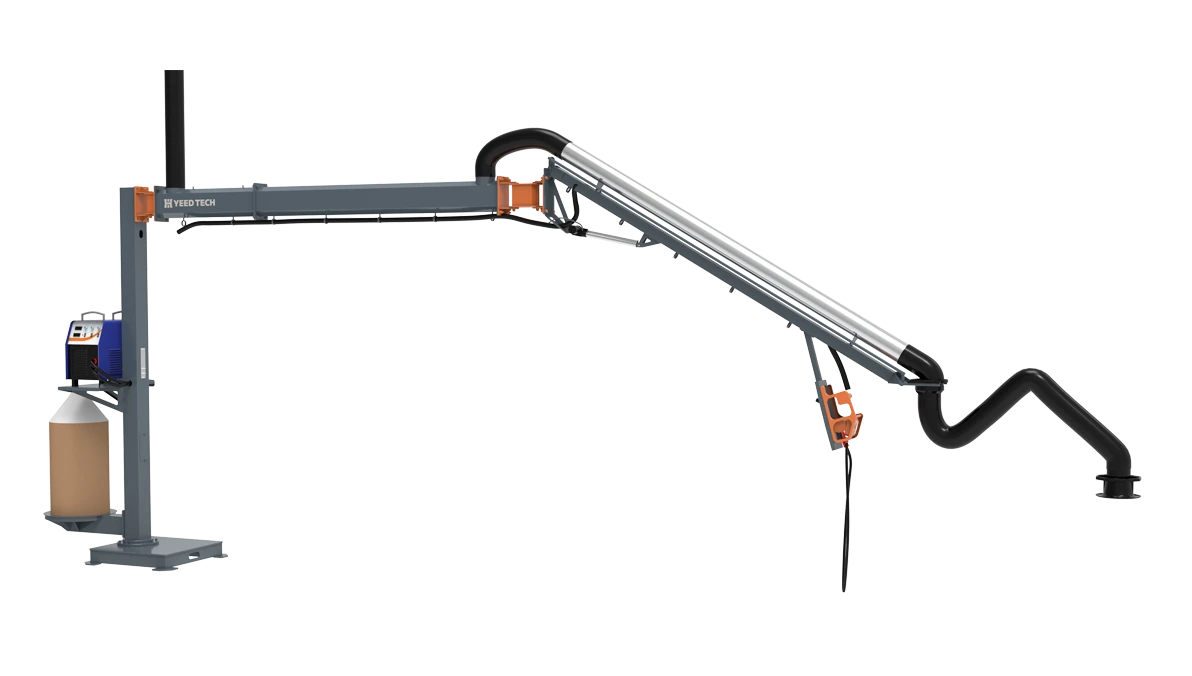
In contemporary industrial environments, particularly within metal fabrication, automotive, and heavy machinery sectors, ensuring optimal air quality and worker safety is paramount. The welding boom arm stands as a cornerstone technology in achieving these objectives. Designed to capture harmful welding fumes directly at the source, these extraction arms are an integral component of comprehensive welding air filtration systems, mitigating health risks associated with particulate matter, gases, and vapours generated during welding operations. This article delves into the technical aspects, applications, and strategic importance of advanced fume extraction solutions, offering insights crucial for B2B decision-makers and technical professionals.
Industry Trends Driving Demand for Advanced Fume Extraction
The global welding industry is witnessing a significant shift towards stricter environmental regulations and heightened awareness of occupational health. Organizations like OSHA (Occupational Safety and Health Administration) and the European Agency for Safety and Health at Work continually update exposure limits for welding fumes, demanding more efficient and reliable welding gas extractor technologies. Key trends include:
- Automation and Robotics Integration: As welding processes become more automated, extraction systems must adapt to robotic cells, often requiring specialized arm designs and synchronized operation.
- Energy Efficiency: There's a growing emphasis on systems that offer high extraction efficiency with minimal energy consumption, often through variable frequency drives (VFDs) and optimized fan designs.
- Smart Monitoring: Integration of sensors for real-time air quality monitoring, filter status, and predictive maintenance alerts is becoming standard, ensuring consistent performance and compliance.
- Modular and Flexible Designs: Facilities require solutions that can be easily reconfigured or expanded to meet changing production layouts and workpiece sizes.
- Advanced Filtration Media: Development of filters with higher MERV (Minimum Efficiency Reporting Value) ratings, including HEPA and activated carbon options, for capturing ultrafine particulates and gaseous contaminants.
These trends underscore the need for high-performance welding boom arm systems that not only meet current safety standards but are also future-proof for evolving industrial demands.
Manufacturing Process of a Welding Fume Extraction Arm
The production of a high-quality welding boom arm involves a meticulous process, ensuring durability, efficiency, and compliance with stringent industry standards. The typical manufacturing flow is:
1. Material Selection & Preparation
- Ducting: High-grade galvanized steel, stainless steel, or robust polypropylene for chemical resistance. Materials are chosen based on the application's corrosivity and temperature.
- Structural Components: High-strength carbon steel or aluminum alloys for articulated joints and support structures, ensuring stability and smooth movement.
- Hoods: Often made from durable plastic composites (e.g., polyamide) for lightweight handling, or metal for high-heat applications, designed for optimal airflow capture.
- Seals: EPDM rubber or silicone to ensure airtight connections and prevent leakage.
2. Component Fabrication
- Cutting & Bending: Precision laser cutting and CNC bending machines are used to form duct sections and structural parts from sheet metal, ensuring exact dimensions.
- Welding: Robotic or skilled manual welding techniques (MIG, TIG) are employed for assembling structural components, followed by rigorous weld inspection.
- Machining: CNC machining ensures high precision for critical components like pivot points, bearings, and mounting flanges, which are vital for smooth articulation and longevity.
- Surface Treatment: Components undergo cleaning, priming, and powder coating or galvanization to enhance corrosion resistance and aesthetic appeal, extending service life, particularly in harsh industrial environments.
3. Assembly & Quality Control
- Assembly: Individual components are meticulously assembled, including bearings, tensioning mechanisms, internal or external support structures, and the extraction hood.
- Testing Standards: Each welding boom arm undergoes rigorous testing to comply with international standards such as:
- ISO 9001: Quality Management System certification.
- EN 15012-1: Health and safety in welding and allied processes — Equipment for capture and separation of welding fume — Part 1: General requirements.
- ANSI/AWS F5.5: Recommended Practices for the Safe Use of Welding Fumes.
- Airflow Performance: Verification of volumetric flow rate and pressure drop characteristics.
- Articulation & Balance: Ensuring smooth, effortless positioning and stability across its entire reach.
4. Service Life & Target Industries
With proper maintenance, a well-engineered welding boom arm is designed for a service life exceeding 10 years, offering exceptional return on investment. Target industries include:
- Petrochemical: Protecting workers from hazardous fumes in refinery and chemical plant maintenance.
- Metallurgy & Heavy Fabrication: Essential for steel mills, foundries, and large-scale metalworking shops.
- Automotive & Shipbuilding: Maintaining air quality in assembly lines and complex fabrication zones.
- Water Supply & Drainage: Ensuring safety during repairs and fabrication of infrastructure components.
- Vocational Training: Providing a safe learning environment in educational institutions.
Advantages in Typical Application Scenarios: These arms demonstrate significant benefits, including energy saving through optimized capture efficiency, superior corrosion resistance due to specialized materials and coatings, and enhanced worker health and productivity.
Technical Specifications: Unpacking the Engineering Behind Fume Extraction Arms
The effectiveness of a welding fume extraction arm hinges on its technical parameters, which dictate its reach, airflow capabilities, and suitability for specific welding processes (MIG, TIG, MMA, Flux-Cored). Understanding these specifications is vital for selecting the right equipment.
| Parameter | Typical Range / Value | Significance |
|---|---|---|
| Arm Diameter | 125mm, 150mm, 160mm, 200mm | Affects volumetric airflow capacity; larger diameter generally supports higher airflow. |
| Arm Reach | 2 meters to 5 meters (6.5 ft to 16.4 ft) | Determines the working envelope and flexibility in positioning the extraction hood. |
| Recommended Airflow | 1000 - 2500 m³/h (590 - 1470 CFM) | Critical for effective fume capture; must match the fan unit's capacity. |
| Material Construction | Galvanized steel, powder-coated aluminum, stainless steel, polypropylene | Impacts durability, corrosion resistance, and suitability for various welding environments. |
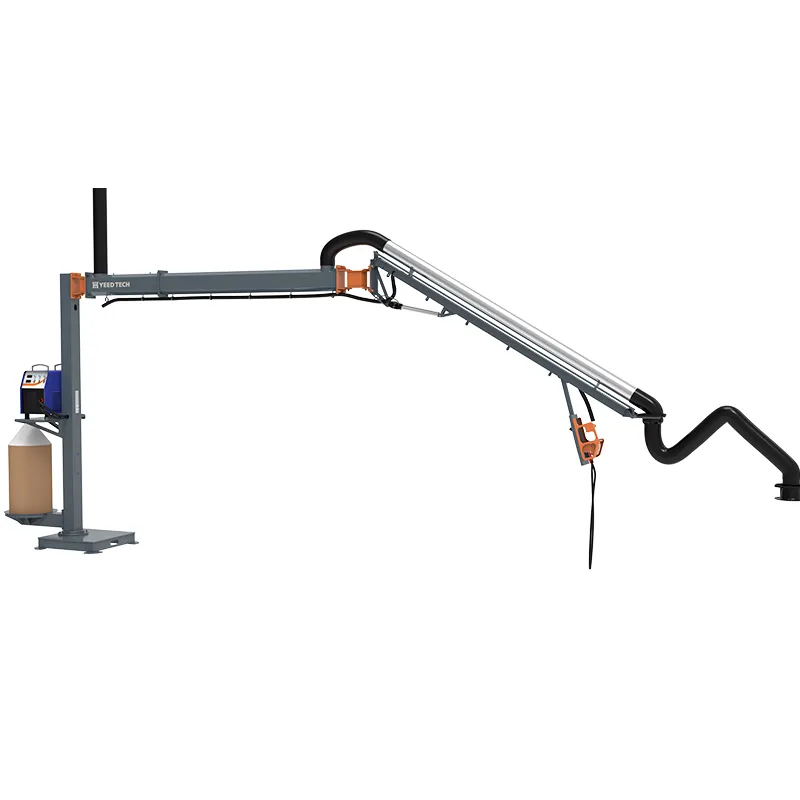
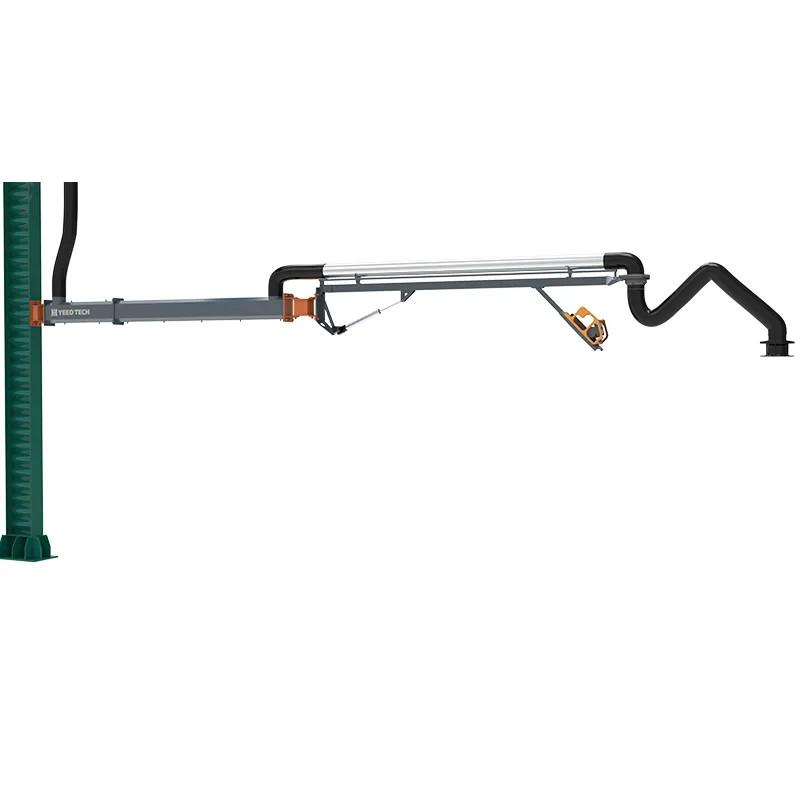
| Mounting Options | Wall, ceiling, column, rail-mounted, mobile unit | Dictates installation flexibility and space utilization in the workshop. |
| Hood Design | Standard conical, flared, specialized for high-heat/spatter | Optimizes capture velocity and minimizes obstruction to the welder. |
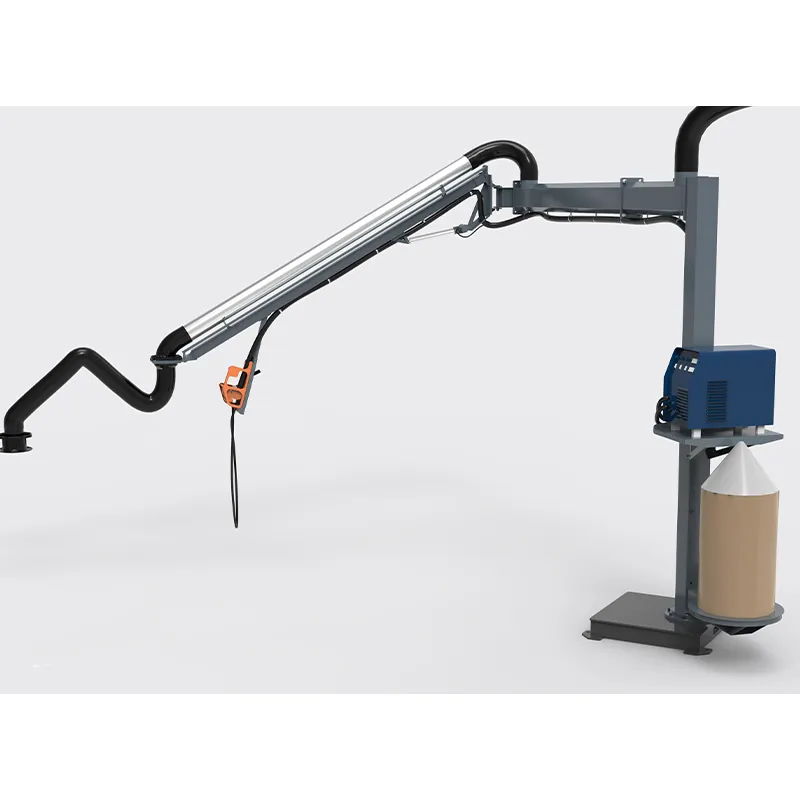
| Articulation | Internal or external support mechanisms; multiple pivot points | Ensures smooth, stable, and effortless positioning of the arm. |
The choice of internal versus external support structure significantly impacts maintenance and airflow. Internal arms offer a sleek design and protection from dust but can accumulate material inside. External arms are easier to maintain but might have minor external obstructions.
Diverse Application Scenarios and Technical Advantages
The versatility of the welding boom arm allows its deployment across a multitude of industrial settings, each benefiting from its specific design attributes.
Application Scenarios:
- Large Fabrication Workshops: Arms with extended reach are crucial for covering broad work areas, accommodating large workpieces without needing to reposition the entire extraction unit.
- Automotive Assembly Lines: Compact and highly maneuverable arms are preferred for precise spot extraction in intricate assembly processes.
- Shipbuilding & Offshore Fabrication: Robust, corrosion-resistant arms are essential for harsh marine environments, handling heavy welding tasks in confined spaces.
- Educational & Training Facilities: Facilitate safe welding practice by ensuring students are protected from fumes, often in multi-station setups.
- Maintenance & Repair Depots: Portable or mobile welding boom arm systems provide flexibility for intermittent repair jobs across different locations.
Technical Advantages:
- Superior Fume Capture: Positioned directly at the source, these arms offer higher capture efficiency (typically >95%) compared to ambient systems, reducing overall workshop contamination.
- Ergonomics & Ease of Use: Counterbalanced designs and multiple pivot points allow for smooth, single-hand positioning, minimizing welder fatigue and maximizing productivity.
- Flexibility & Reach: Available in various lengths and mounting options (wall, ceiling, column, mobile), they provide unparalleled flexibility to accommodate diverse work envelopes.
- Compliance with Regulations: Helps facilities meet or exceed strict air quality standards set by health and safety authorities, reducing legal risks and improving worker morale.
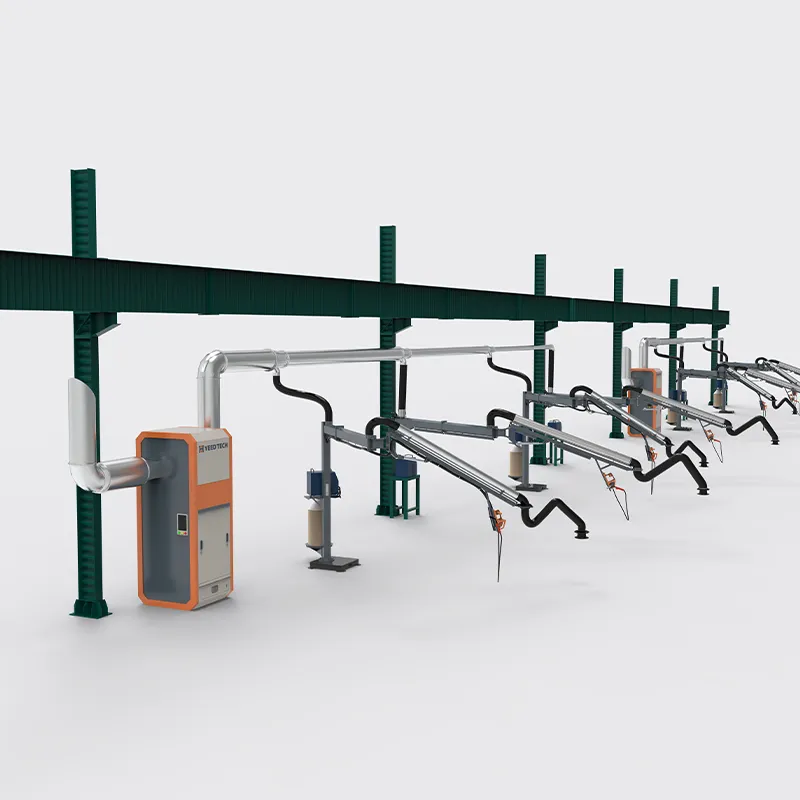
- Integration Capability: Seamlessly integrate with centralized welding air filtration systems or dedicated mobile extraction units.
- Low Pressure Drop Design: Optimized internal airflow paths minimize resistance, leading to lower energy consumption for the attached fan unit.
Vendor Comparison and Customized Solutions
When investing in a welding boom arm, a comprehensive vendor comparison is essential. Factors such as technical specifications, build quality, support, and welding fume extraction arm price are critical.
Vendor Comparison Table (Illustrative)
| Feature | Vendor Y (e.g., Yeeeed) | Vendor A | Vendor B |
|---|---|---|---|
| Arm Diameter Range | 125mm - 200mm | 100mm - 160mm | 150mm - 200mm |
| Max. Reach | 5 meters | 4 meters | 4.5 meters |
| Articulation Mechanism | Internal, spring-assisted | External, gas strut | Internal, friction-based |
| Construction Material (Duct) | Galvanized steel / SS304 option | Anodized aluminum | Powder-coated steel |
| Corrosion Resistance | High (Multiple coating options) | Medium (Standard coating) | Medium (Standard coating) |
| Certifications | ISO 9001, EN 15012 | CE Compliant | ISO 9001 |
| Warranty | 3 years | 1 year | 2 years |
Customized Solutions: Tailored for Specific Needs
Recognizing that no two industrial setups are identical, leading manufacturers offer extensive customization options for their welding boom arm systems:
- Specialized Coatings: For environments with aggressive chemicals or extreme temperatures, specialized epoxy or ceramic coatings can be applied.
- Extended Reach & Heavy-Duty Design: Custom lengths and reinforced structures for exceptionally large workpieces or heavy-duty applications.
- ATEX Certification: For explosive atmospheres (e.g., grinding aluminum or certain chemical processes), ATEX-certified components ensure safety compliance.
- Integrated Lighting & Cameras: Enhancing visibility for precision welding or enabling remote monitoring of the welding process.
- Material-Specific Components: Using stainless steel for food-grade environments or specific plastics for chemical inertness.
- Custom Mounting Brackets: Designed to integrate seamlessly with existing building structures or machinery.
These bespoke solutions ensure optimal performance and integration, directly addressing the unique challenges of each client.
Application Case Studies: Real-World Impact
The efficacy of a welding boom arm is best illustrated through its successful implementation in diverse industrial settings.
Case Study 1: Heavy Machinery Manufacturer
A large manufacturer of construction equipment faced challenges with ambient fume levels during the welding of excavator frames, leading to worker discomfort and potential regulatory non-compliance. By installing multiple 4-meter reach welding boom arm units connected to a centralized extraction system, the facility achieved a 70% reduction in airborne particulate matter in welding zones. This not only improved worker health but also increased overall productivity due to better visibility and a more comfortable working environment. The quick and easy positioning of the arms meant welders spent less time adjusting equipment and more time on tasks.
Case Study 2: Precision Robotics Fabrication
A company specializing in robotic arm fabrication required precise fume extraction for TIG welding of intricate aluminum components. Their existing system was inefficient for the small, highly localized weld areas. Implementing compact, 2-meter welding fume extraction arm models with specialized high-capture hoods allowed for surgical precision in fume removal without interfering with the delicate welding process. The result was a near-complete elimination of localized fume exposure and a significant reduction in post-welding cleaning requirements on sensitive electronic components.
Ensuring Trust and Authority: FAQ, Lead Time, Warranty, & Support
Frequently Asked Questions (FAQ)
Q: How often do filters need to be changed in a welding fume extraction system?
A: Filter life varies significantly based on welding volume, type of material, and fume concentration. For heavy-duty applications, pre-filters might need weekly cleaning/replacement, while main HEPA filters can last 6-12 months. Systems with automatic pulse-jet cleaning extend filter life. Consult the system's differential pressure gauge and manufacturer guidelines.
Q: Can a single extraction arm serve multiple welding stations?
A: Typically, a single welding boom arm is designed for one active welding station to ensure optimal capture velocity. However, a centralized system can support multiple arms if each arm is individually valved and the overall fan capacity is sufficient for the number of simultaneous users. For peak efficiency, dedicated extraction points are recommended.
Q: What is the typical lead time for a customized welding boom arm?
A: Standard models of welding fume extraction arm usually have a lead time of 4-6 weeks, depending on inventory and specific configuration. For highly customized solutions, lead times can extend to 8-12 weeks, as they involve detailed engineering, specialized material sourcing, and bespoke manufacturing processes. Accurate timelines are provided upon project scope finalization.
Lead Time & Fulfillment
We strive for efficient order fulfillment. Standard welding fume extraction arm products are typically shipped within 4-6 weeks of order confirmation. For bespoke or complex custom solutions, a detailed production schedule will be provided, with typical lead times ranging from 8-12 weeks. Our logistics team ensures timely and secure delivery globally, often partnering with established freight carriers to meet specific project deadlines.
Warranty Commitments
Our welding boom arm products are backed by a comprehensive 3-year limited warranty, covering defects in materials and workmanship. This commitment reflects our confidence in the durability and quality of our engineering. Specific terms and conditions apply and are available upon request. Extended warranty options are also available for critical industrial applications.
Customer Support & After-Sales Service
We provide unparalleled technical support, from initial consultation and system design to installation assistance and post-sales maintenance. Our expert team offers:
- Technical Consultations: Assisting clients in selecting the optimal welding boom arm and extraction system configuration.
- Installation Guidance: Detailed manuals and remote support to ensure correct setup.
- Spare Parts & Consumables: Readily available inventory of critical components and filters to minimize downtime.
- On-site Training: For larger installations, we offer training for operators and maintenance staff.
- Maintenance Programs: Tailored service agreements to ensure the longevity and peak performance of your investment.
Conclusion
The advanced welding boom arm is more than just a piece of equipment; it is a vital investment in worker health, operational efficiency, and regulatory compliance. With continuous innovation in design, materials, and integration capabilities, these fume extraction solutions are indispensable for any modern industrial facility performing welding operations. By understanding the technical intricacies, considering tailored solutions, and partnering with reputable vendors, businesses can significantly enhance their workplace safety and long-term productivity.
References
- Occupational Safety and Health Administration (OSHA). "Safety and Health Regulations for Welding, Cutting, and Brazing." Available at: osha.gov
- European Agency for Safety and Health at Work (EU-OSHA). "Welding fumes." Available at: osha.europa.eu
- International Organization for Standardization (ISO). "ISO 9001: Quality management systems — Requirements." Available at: iso.org
- CENELEC. "EN 15012-1: Health and safety in welding and allied processes — Equipment for capture and separation of welding fume — Part 1: General requirements." Available at: cenelec.eu
- American Welding Society (AWS). "AWS F5.5: Recommended Practices for the Safe Use of Welding Fumes." Available at: aws.org
Latest News
-
Efficient automated hot air drying equipment for steel structure application
NewsApr.16,2026 -
Efficient hot air drying system for steel structure spraying line
NewsApr.09,2026 -
Optimizing Steel Structure Spraying with Hot Air Drying Technology Solutions
NewsApr.07,2026 -
HighEfficiency Hot Air Drying Painting Equipment for Superior Industrial Coatings
NewsApr.04,2026 -
Optimizing Industrial Processes with Hot Air Furnace Heating Spraying Systems
NewsMar.31,2026 -
Comprehensive Tailormade Steel Structure Spraying Solution for Enhanced Durability
NewsMar.28,2026 -
Optimizing Steel Structure Protection through Customization and Integration of Spraying System
NewsMar.26,2026


