


Ensuring Safety in Public Spray Painting Line Projects
The development of public infrastructure is a cornerstone of modern society, involving bridges, railway stations, airports, and large public venues. A critical, yet often hazardous, phase in constructing these monumental projects is the application of protective coatings to the steel skeletons that form their core. Traditional manual spray painting line operations present significant challenges, including exposure to toxic fumes, flammable materials, and repetitive strain injuries, all within environments that are difficult to fully isolate. As a leader in industrial automation, Yeed Tech Co., Ltd. addresses these concerns head-on by pioneering intelligent solutions that redefine safety and efficiency. The company's core mission is to develop equipment that integrates automation, intelligence, and safety to replace traditional manual labor in steel structure production, including cutting, forming, welding, and painting. This article explores how advanced, automated systems are transforming safety protocols in public projects, ensuring both worker welfare and structural longevity.
Integrating Advanced Automation for Spray Painting Line
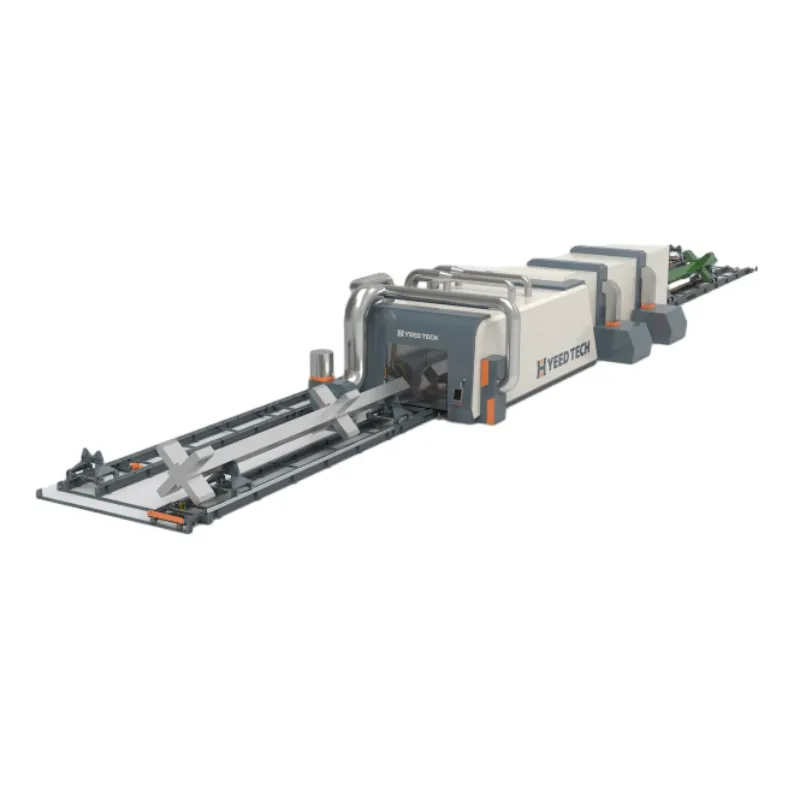
The primary safety risk in any painting operation stems from human presence in a contaminated and potentially explosive atmosphere. Yeed Tech's approach is to fundamentally remove the operator from direct exposure. Their intelligent automatic painting line is designed as a fully enclosed system where robotic arms and precision machinery perform all coating tasks. This engineered isolation is the first and most crucial step in risk mitigation. By creating a physical barrier between the worker and the hazardous zone, the risks of inhaling volatile organic compounds (VOCs) or contact with harmful solvents are virtually eliminated. Furthermore, these enclosed systems are often integrated with advanced ventilation and filtration systems that actively capture overspray and fumes at the source, preventing them from escaping into the wider work environment. This is particularly vital in public projects, where multiple trades may be working simultaneously nearby. The shift from a manual spray painting line to a fully automated one transforms the worksite from a high-risk area into a controlled, industrial process, managed from a safe, remote operator station.
Enhancing Coating Quality and Consistency on Steel Structure Painting
Safety in public projects is not solely about immediate human welfare; it also encompasses the long-term structural integrity and safety of the asset itself. The protective coating on a steel structure is its first line of defense against corrosion, which can compromise strength over decades. Yeed Tech's systems are engineered to deliver a level of quality and consistency that is unattainable through manual methods. This system solves the problems of high labor intensity, low efficiency, large number of people, unstable coating quality, poor uniformity, and waste of paint that exist in manual spraying. It has the advantages of low labor force, high spraying efficiency, good spraying quality, uniform coating, and saving paint. For every steel structure painting project, be it a long-span bridge or a complex architectural framework, this uniformity is non-negotiable. The device has an automatic scanning system that can intelligently identify the three-dimensional structure of components in all directions through 3D scanning, preparing for painting. This ensures that even the most complex geometries receive a consistent film thickness, leaving no weak spots for corrosion to begin. By achieving a perfect balance between quality, quantity, and cost, this technology ensures that public infrastructure remains safe and durable for its entire design life.
The Operational Advantages of a Automatic Painting Line System
The operational benefits of an intelligent automatic painting line extend beyond the paint booth. Yeed Tech's product lines, which include intelligent spraying and cutting lines, are designed with integration in mind. In a typical setup for public works, the steel components move through a pre-programmed sequence. The 3D scanning system first captures the precise dimensions of each piece, and this data is used to generate an optimal robotic path for the spray painting line. This closed-loop process minimizes human intervention, which in turn reduces the potential for human error—a common cause of both accidents and quality defects. The efficiency gains are substantial; projects are completed faster, reducing the overall window of time during which a hazardous activity is taking place on site. Moreover, the significant savings in paint material not only lower costs but also reduce the volume of hazardous chemicals that need to be stored, handled, and disposed of on-site, further shrinking the project's environmental and safety footprint. This holistic approach to the steel structure painting process makes it a superior choice for large-scale, public-facing developments where timeline, budget, and safety are paramount.
FAQs About Our Automated Coating Systems
How does the automated system ensure consistent quality in complex steel structure painting projects?
The system utilizes a proprietary 3D scanning technology that creates a digital model of each component. The robotic painting arms then use this model to apply paint with millimeter precision, ensuring uniform thickness and complete coverage on every surface, regardless of its shape or orientation, eliminating human inconsistency.
What are the primary safety benefits of switching from a manual to an automatic painting line?
The most significant benefit is the removal of personnel from the hazardous painting environment. This eliminates exposure to toxic fumes, flammable materials, and noise. Additionally, the enclosed nature of the system contains overspray and contaminants, creating a safer and cleaner worksite for everyone.
Can your spray painting line handle the large and varied sizes of components found in public works?
Yes, our intelligent spraying lines are designed with scalability and flexibility in mind. The conveyor systems and robotic work envelopes can be customized to accommodate very large steel members, such as girders for bridges or trusses for stadium roofs, ensuring a continuous and efficient workflow.
How does the technology achieve automatic painting line savings compared to manual methods?
The combination of 3D scanning and precise robotic path planning ensures that paint is applied only where it is needed, at the exact required thickness. This eliminates the overspray and uneven application common in manual spraying, leading to paint savings that can be substantial on large-scale projects.
Is the spray painting line system truly automated, and what is the role of the operator?
The core painting process is fully automated. The operator's role is elevated to a supervisory and management level, involving tasks such as system monitoring, loading paint parameters, performing quality checks from a remote station, and managing the workflow, all from a safe and clean control room.
The imperative for safety in public construction projects is absolute. The adoption of intelligent, automated coating systems represents a paradigm shift in how the industry approaches the critical task of protecting steel. Companies like Yeed Tech Co., Ltd., with their focus on automation, intelligence, integration, and safety, are at the forefront of this transformation. By deploying their intelligent spray painting line solutions, project stakeholders can ensure a safer workplace for their teams, a higher quality and more durable finish for the public asset, and a more efficient, cost-effective operation overall. The move towards a fully integrated automatic painting line is no longer just an option for enhancing productivity; it is a fundamental commitment to upholding the highest standards of safety and quality in the steel structure painting processes that underpin our shared infrastructure.
Latest News
-
Efficient automated hot air drying equipment for steel structure application
NewsApr.16,2026 -
Efficient hot air drying system for steel structure spraying line
NewsApr.09,2026 -
Optimizing Steel Structure Spraying with Hot Air Drying Technology Solutions
NewsApr.07,2026 -
HighEfficiency Hot Air Drying Painting Equipment for Superior Industrial Coatings
NewsApr.04,2026 -
Optimizing Industrial Processes with Hot Air Furnace Heating Spraying Systems
NewsMar.31,2026 -
Comprehensive Tailormade Steel Structure Spraying Solution for Enhanced Durability
NewsMar.28,2026 -
Optimizing Steel Structure Protection through Customization and Integration of Spraying System
NewsMar.26,2026


